


A Recap of LSU Research in 2025: Real-World Impact, Creativity, and Leadership
December 10, 2025
Every year, LSU researchers take on Louisiana’s most urgent challenges—and push the boundaries of discovery far beyond our state’s borders.
In 2025, that work delivered bold solutions rooted in ingenuity, collaboration, and a deep commitment to improving lives. From protecting coastal communities to advancing biomedical breakthroughs, LSU continued to produce research that matters both here and around the world.
This year’s stories reveal a powerful pattern: When Louisiana presents a problem, LSU responds with innovation. Whether developing biodegradable Mardi Gras throws, accelerating hurricane forecasting, exploring the cosmic origins of gold, or helping industry harness next-generation digital tools, LSU’s faculty and students are transforming ideas into real-world impact.
Louisiana Problem; LSU solution
Researchers’ Reimagined Mardi Gras Throws are Biodegradable — and They Bloom
Colorful beads are a beloved part of Mardi Gras. However, they're also a harmful part, ecologically damaging in ways that often persist for decades. An LSU research team is helping to solve this problem by developing biodegradable beads.
Smarter, Faster Forecasting
LSU Innovation Powers Nation's Most Trusted Hurricane Storm Surge Forecasting Tool
Since its inception in 2006, LSU’s Coastal Emergency Risk Assessment has been delivering ever-improving storm-surge forecasts via an easy-to-use website meant for coastal residents and the emergency managers tasked with keeping them safe.
A New Antibiotic Approach
Researchers Are on a Mission to Outsmart Resistant Bacteria and Save Lives Worldwide
Across the world, bacteria are evolving faster than medicine can keep up. Antibiotic resistance is growing, and once-powerful drugs are losing their punch.
At LSU, Department of Chemistry Professor Mario Rivera and his cross-disciplinary research team are trying to find a new class of antibiotics that focuses on a different part of bacteria physiology untouched by existing antibiotics.
Accelerating Cybersecurity
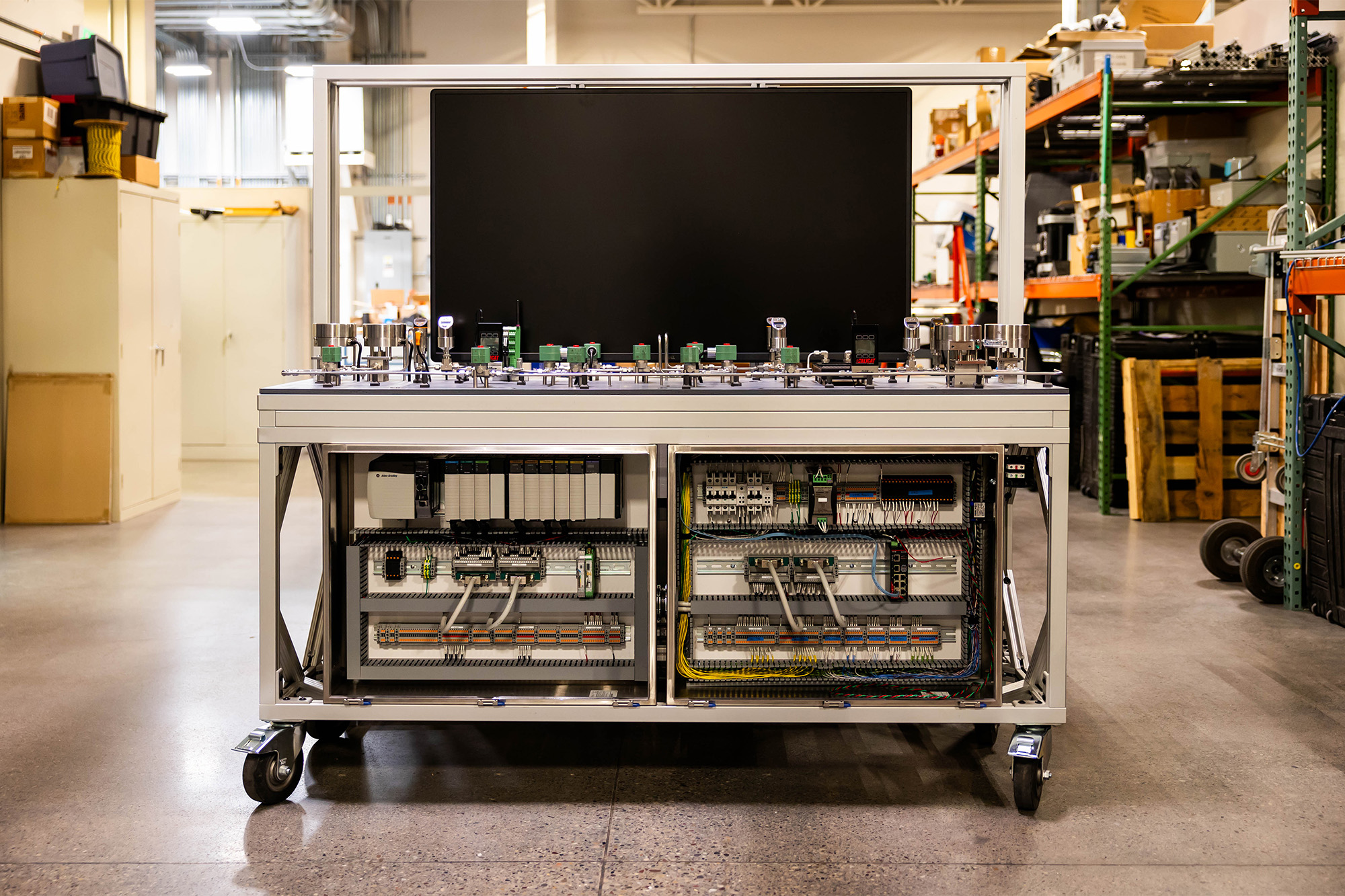
LSU’s new Tiger Skid will enable LSU faculty, staff, and students and energy industry, state agency, and national security partners to train and learn to defend against cyberattacks on critical infrastructure. Photo courtesy of INL.
LSU Emerges as National Leader
in Cyber for Critical Infrastructure
LSU is the first university in the nation to partner with the Cybersecurity and Infrastructure Security Agency, the Department of Homeland Security Science and Technology Directorate, and Idaho National Laboratory on a new model for cybersecurity for critical infrastructure.
Louisiana’s unique energy, chemical, and manufacturing assets and LSU’s industry partnerships and cybersecurity expertise are positioning the state as an epicenter of advanced cyber talent and technology development.
Gold's Cosmic Origins
LSU Astrophysicist Helps Trace Origin
of the First Gold in the Universe
Nearly everyone has looked up at the night sky and wondered about the mysteries of the universe. LSU astrophysicist Eric Burns says he and his fellow experts have been doing that very thing from a scientific perspective, and they struck gold.
In a breakthrough, their research confirmed that magnetars, a special class of neutron stars, have produced gold since the death of the first stars, close to the beginning of the universe.
State-of-the-ARt Instrument

The new microscope—the most advanced in Louisiana—was installed with $10 million in support from the U.S. Army.
LSU Launches Louisiana’s Most Advanced Microscope at Research Core Facility
LSU’s Advanced Microscopy and Analytical Core facility gives Louisiana researchers access to 16 state-of-the-art instruments, including a new Spectra 300 Scanning Transmission Electron Microscope for atomic-scale imaging and analysis.
The microscope offers magnification up to 10 million times, powerful enough to enlarge a single grain of Mississippi River silt to the size of Tiger Stadium.
From Complexity to Clarity
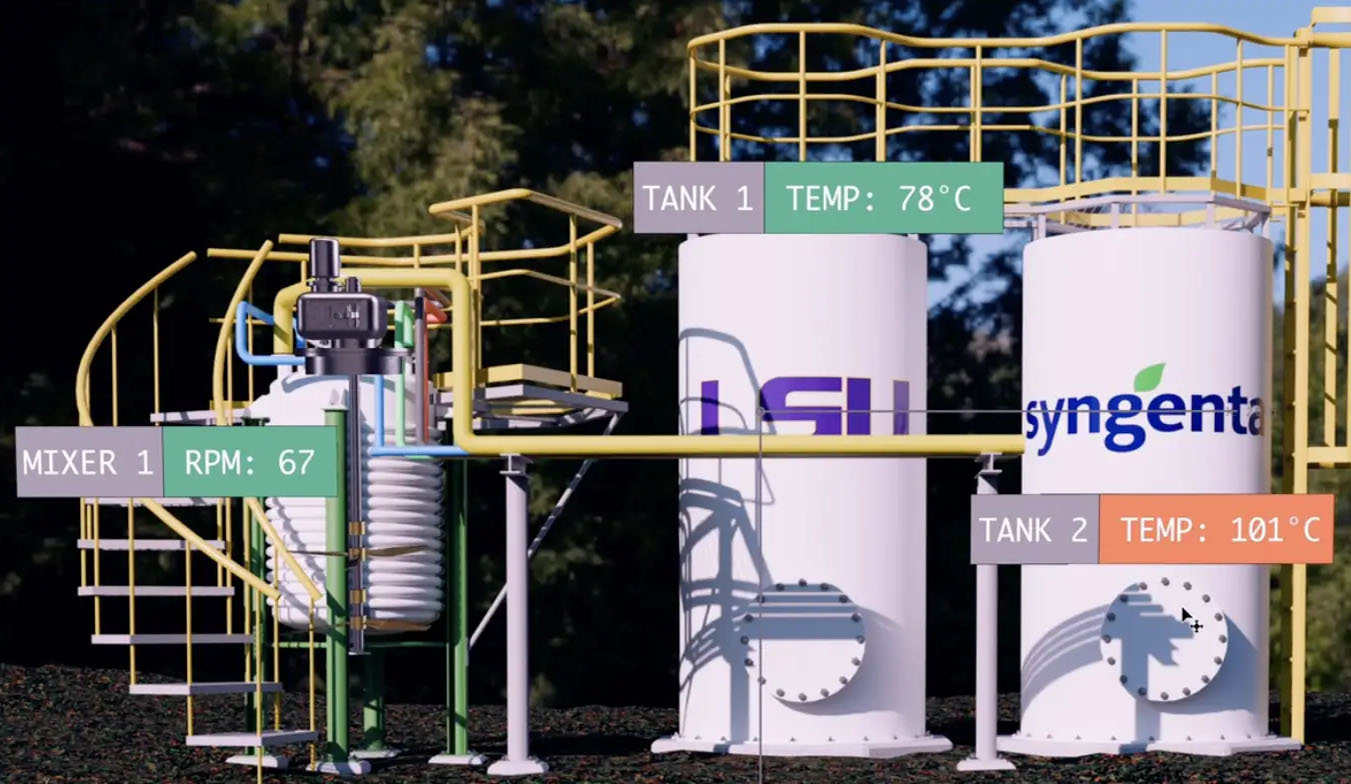
LSU's digital twin team is turning real-world complexity into digital clarity—from a phone scan to a virtual replica with informational overlays to see current status and changes in real time.
LSU, FUEL, Syngenta Partner to Develop
Low-Cost Digital Twins for Chemical Facilities
Syngenta, a science-based agriculture company with a key production site in St. Gabriel, Louisiana, partnered with LSU and FUEL to transform how digital twins are created for chemical processing facilities.
Derick Ostrenko and Jason Jamerson, faculty in the LSU College of Art & Design, along with engineering advisor David Ben Spry, are pioneering a new approach to industrial innovation using digital twins. The effort is supported by a $217,403 use-inspired research and development award from Future Use of Energy in Louisiana.
PRestigious Grants
Five LSU Faculty Members Win National Science Foundation CAREER Awards
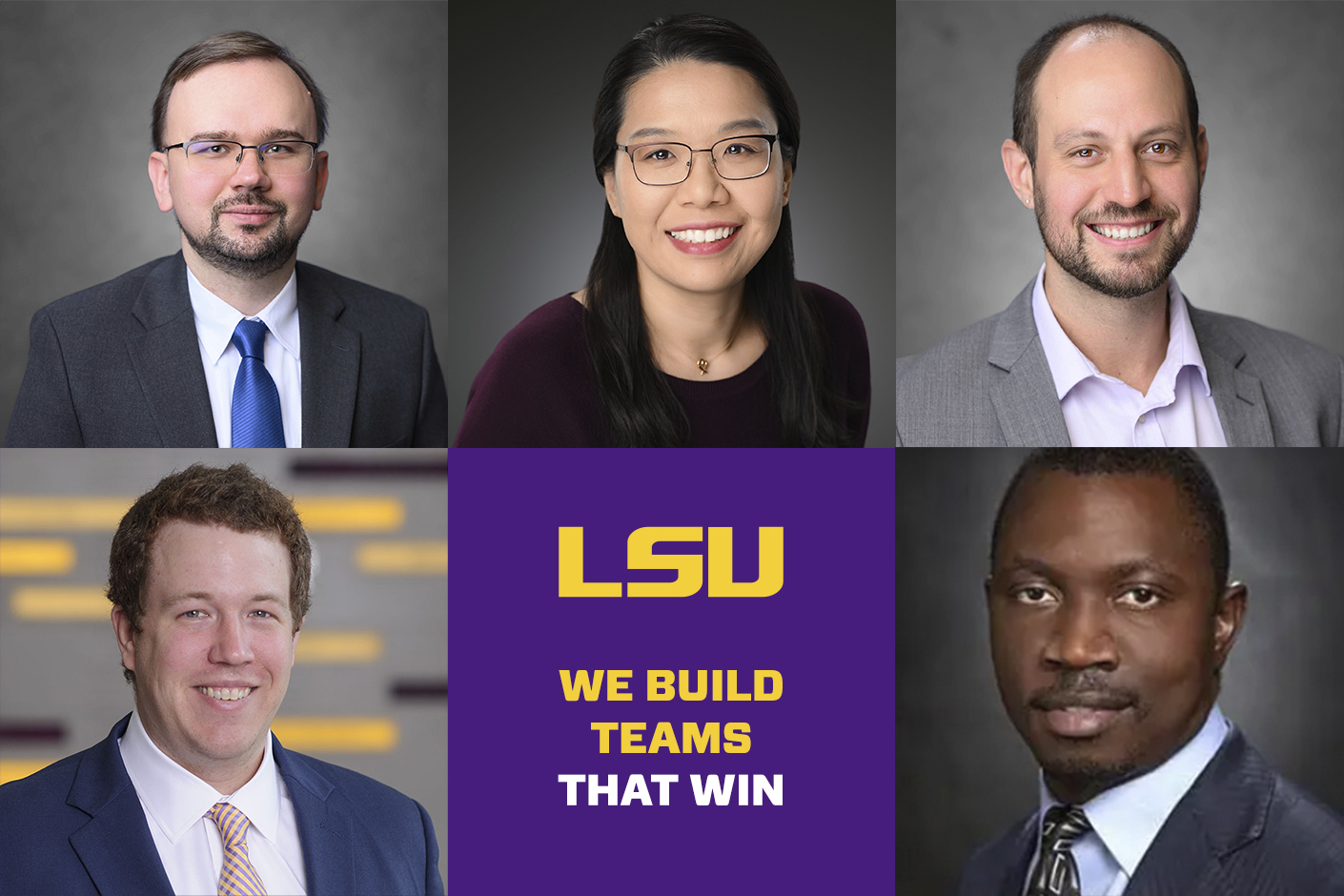
Five LSU faculty members have been awarded the National Science Foundation’s most competitive grant for early-career researchers. Awardees are chosen because of their potential to serve as lifelong academic role models in research and education, as well as their ability to support their organizations’ missions.
Among Southeastern Conference (SEC) universities, LSU ranks in the top third for number of CAREER awards in the 2024-2025 academic year.
Recipients are:
- Sviatoslav Baranets, assistant professor of chemistry in the LSU College of Science
- Christopher Marvel, assistant professor of mechanical engineering in the LSU College of Engineering
- Nicholas Mason, assistant professor and curator of birds at the LSU Museum of Natural Science
- Olufemi Olorode, associate professor of petroleum engineering in the LSU College of Engineering
- Amy Xu, assistant professor of chemistry in the LSU College of Science
Research-Funding Highlights
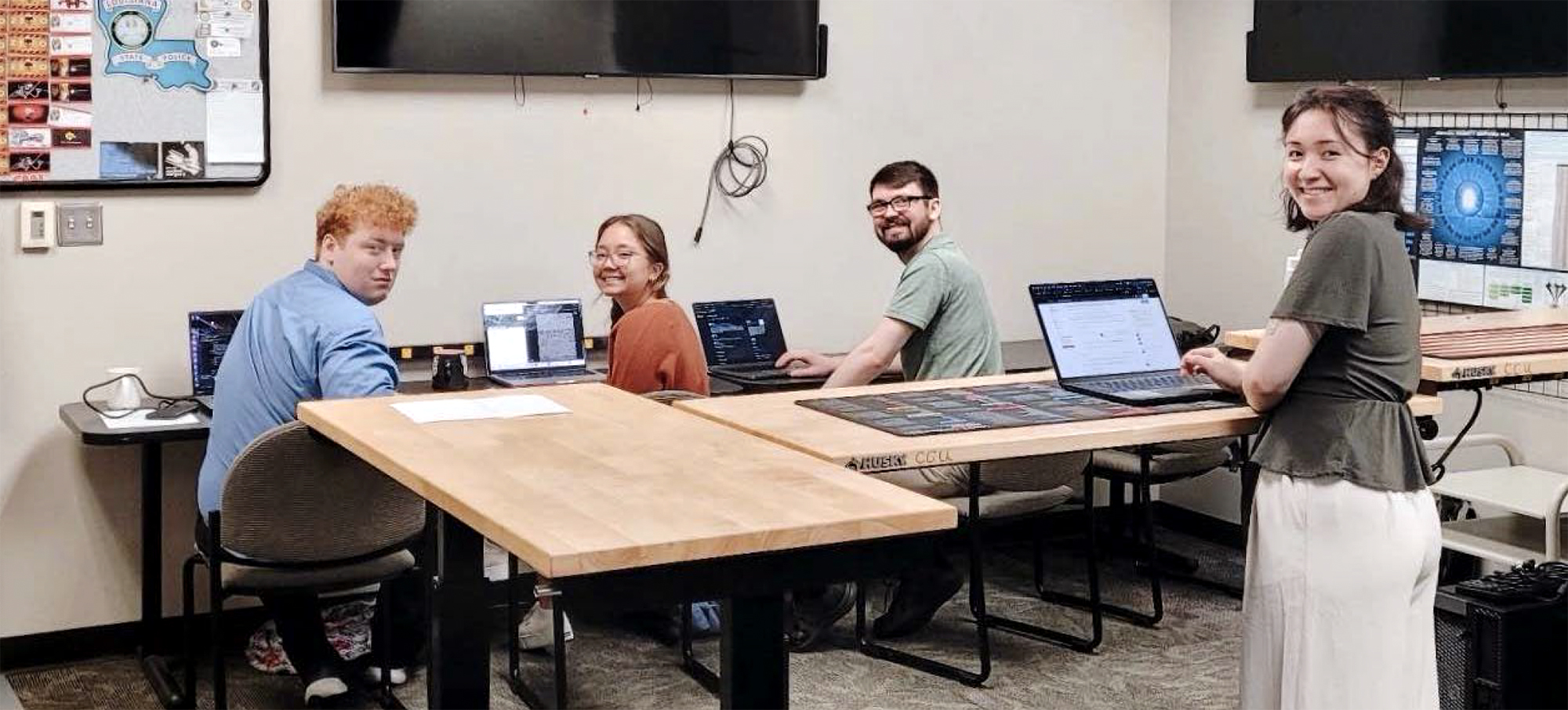
New funding will allow LSU to continue and expand its CyberCorps Scholarship for Service program, the largest effort in U.S. history to educate highly technical cyber warriors for national security careers.
Funding Bolsters LSU Leadership, Driving Critical Research and Creating Solutions
LSU continues to expand its impact in Louisiana and the world through its growing research programs across the university's priority areas of Agriculture, Biomedical, Coast, Defense/Cyber, and Energy. Funding highlights from 2025 include:
- A $7 million E-RISE award from the National Science Foundation (NSF) to support farms and chemical manufacturing
- $2.4 million from the NSF for LSU's cyber training program, making the university one of only six U.S. schools to receive CyberCorps funding this year
- A one-year $2.5 million CREATED project to test-run ecosystem designs in landscapes designated to represent areas of concern for the military, in coordination with sister project PREDICT, an effort to build predictive modeling and simulation tools for short- and long-term dynamics in coastal basins.
-
A first-of-its-kind grant from the NSF to bring 10 of the country’s most brilliant research students to LSU to pursue a Ph.D. and emerge as leaders in energy and environmental science.
Team Record

LSU Eclipsed Half-Billion Milestone
in Research Activity for 2023-24
For four straight years in a row, LSU has soared in research. In the 2023-2024 academic year, LSU’s research campuses in Baton Rouge, New Orleans, and Shreveport achieved a record-breaking $543 million in combined research activity.
Not only did this lead to life-changing discoveries and support thousands of jobs—the direct economic impact of LSU research on Louisiana is higher than ever, estimated at $1.5 billion..
Listening to Nature
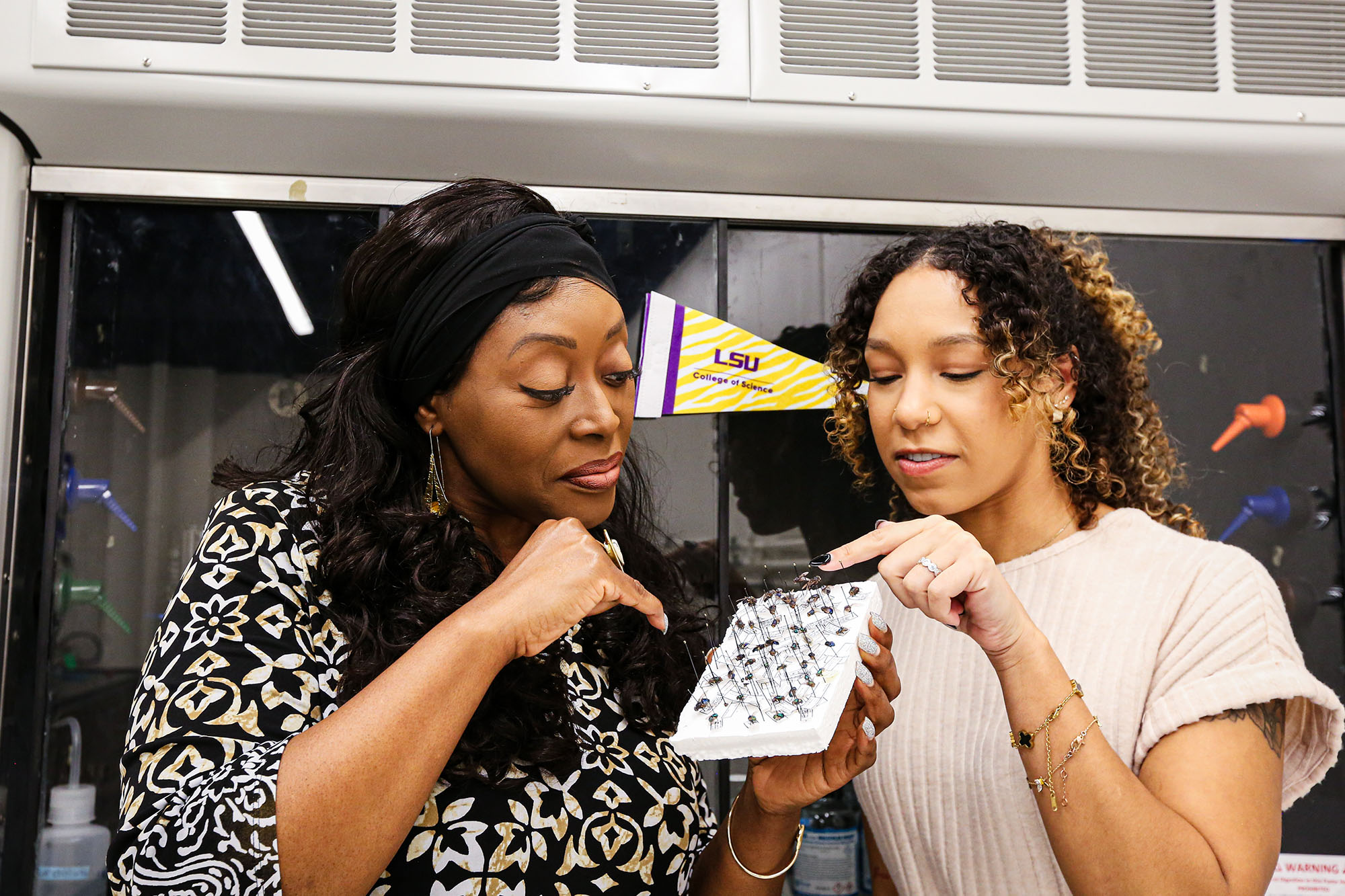
Rabi Musah, left, the Patrick F. Taylor Endowed Chair in Environmental Chemistry at LSU, and PhD student Alexa Figueroa look at a series of different blow fly and other necrophagous fly specimens.
Speaking for the Dead: Lab Uses Insects' Chemical Clues for Forensic Investigation
LSU Professor Rabi Musah’s lab explores applications of chemical fingerprinting, including the identification of insects that feed on decomposing materials.
Scavengers, humidity, and bacteria can erase critical forensic clues in days. But one kind of evidence always arrives within minutes and stays long after other evidence is gone: flies.
Flies have turned out to be excellent backup for forensic evidence, giving rise to the field of forensic entomology. The Musah lab is taking this field a step further, using rapid analysis of the flies’ chemical signatures to make it easier than ever to collect forensic evidence from a corpse’s bugs.
Strengthening La. Industry
LSU Researchers Are Learning How to Make Metals and Ceramics that Can Take the Heat
At LSU’s Extreme Processing & Interfacial Complexions (EPIC) Lab, researchers are using combinations of extreme temperatures, extreme heating/cooling rates, and/or extreme pressures to fabricate high-performance structural materials for advanced applications, including in areas important to Louisiana industry.
Chris Marvel, assistant professor in LSU’s Department of Mechanical and Industrial Engineering, oversees the EPIC lab and its team of undergraduates, graduate students, and postdoctoral researchers.
Next Step
Discover stories showcasing LSU’s academic excellence, innovation, culture, and impact across Louisiana.