


LSU Research Creature Crushes: Meet Your Valentine by Your Star Sign!
February 11, 2026
This Valentine’s Day, we are excited to help you meet your crush—your Creature Crush, that is! Find your star sign below and learn more about your match!
Capricorn
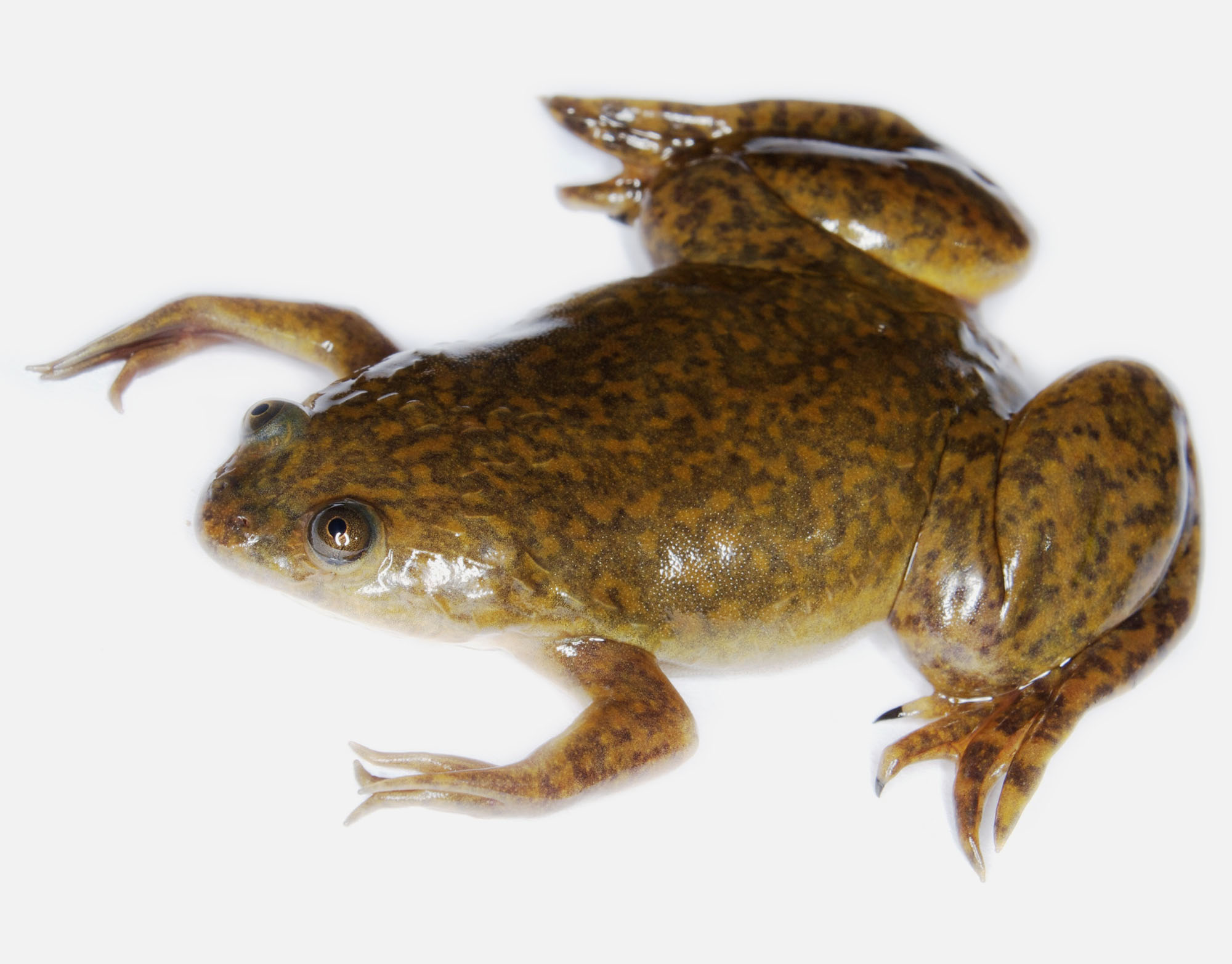
African Clawed Frog
– Credit: Brian Gratwicke Flickr, Public Domain
Meet the African Clawed Frog!
Don’t let this frog’s looks fool you. They have real emotional depth!
Did you know? In the 1950s and 60s, the African Clawed Frog was used in pregnancy tests. Scientists injected frogs subcutaneously with the urine of potentially pregnant women. If the frog laid eggs, the woman was pregnant!
Other fun facts? Male African Clawed Frog love to cuddle. They display a mating embrace or “hug” called amplexus. Males also "sing" rhythmic clicking songs underwater to attract mates.
Females African Clawed Frogs lay over 1,000 eggs in one spawning event.
The LSU AgCenter Aquatic Germplasm and Genetic Resources Center (AGGRC) has worked with African clawed frogs for six years, as they are a major biomedical model. NIH has invested over $6 billion in research on the African Clawed Frog.
These frogs are used in science to understand human diseases, including nervous system diseases, Alzheimer's disease, and skeletal and muscular diseases, among others. The AGGRC develops the technology, guidelines, and processes to protect the gene pools of this frog and other animals.
Aquarius
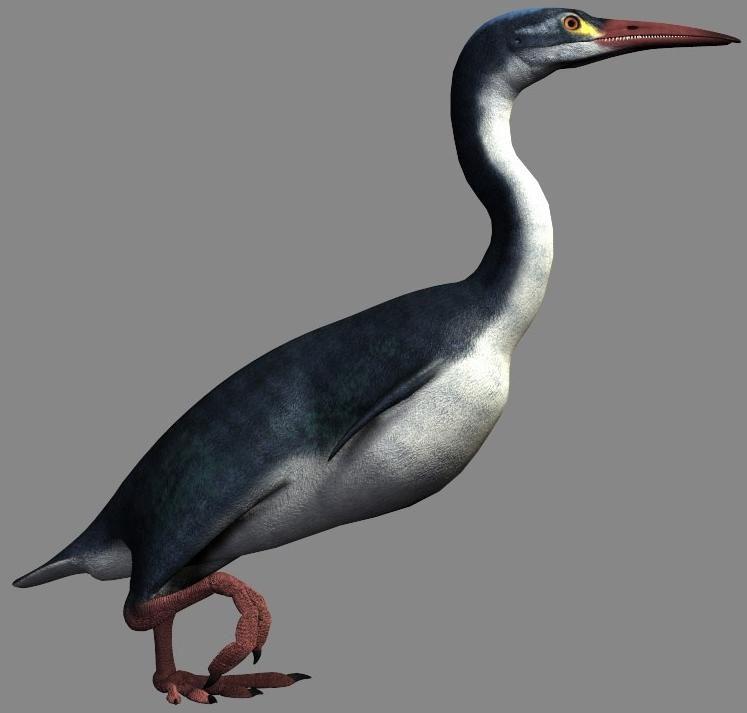
A reconstruction of Hesperornis regalis.
– Credit: Andrei Zinoviev, LSU
Meet the Hesperornis Regalis!
This bird is an ancient diving bird, a relative of the cormorant. Its fossils have been found in North America and Russia.
Dominique Homberger, an alumni professor of the LSU College of Science, and students developed computer models of this ancient bird, modeled bone by bone, to visualize how it might have moved. Homberger’s lab ultimately concluded that this was one of the most powerful and specialized diving birds.
Fun fact? This bird had teeth!
Pisces
A new species of shrew.
– Credit: LSU Museum of Natural Science
Meet the Crocidura Shrew!
Cute, nocturnal, and eats insects; what else do you need to fall in love?!
More than a dozen species in this genus of shrew have been discovered by researchers at the LSU Museum of Natural Science, including Jacob Esselstyn. Many of these shrews live on islands in Southeast Asia. These animals are nocturnal and have quite large appetites – their favorite type of date is definitely a dinner date!
LSU researchers have used genetic research to identify new shrew species that look a lot alike.
Aries
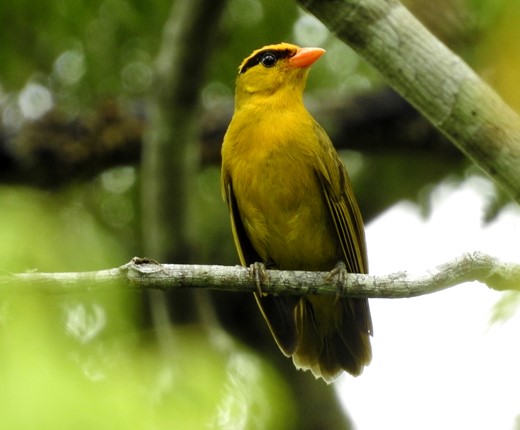
Inti Tanager
– Credit: LSU Museum of Natural Science
Meet the Inti Tanager!
This bird, Heliothraupis oneilli, is stunning and both visually and geneticlaly distinctive, so much so that it has its own genus.
The male has a black stripe above his eye and wears the theme colors of “Kill Bill.” It is found in Bolivia and Peru. It was discovered by LSU researchers including Daniel Lane at the LSU Museum of Natural Science!
Taurus
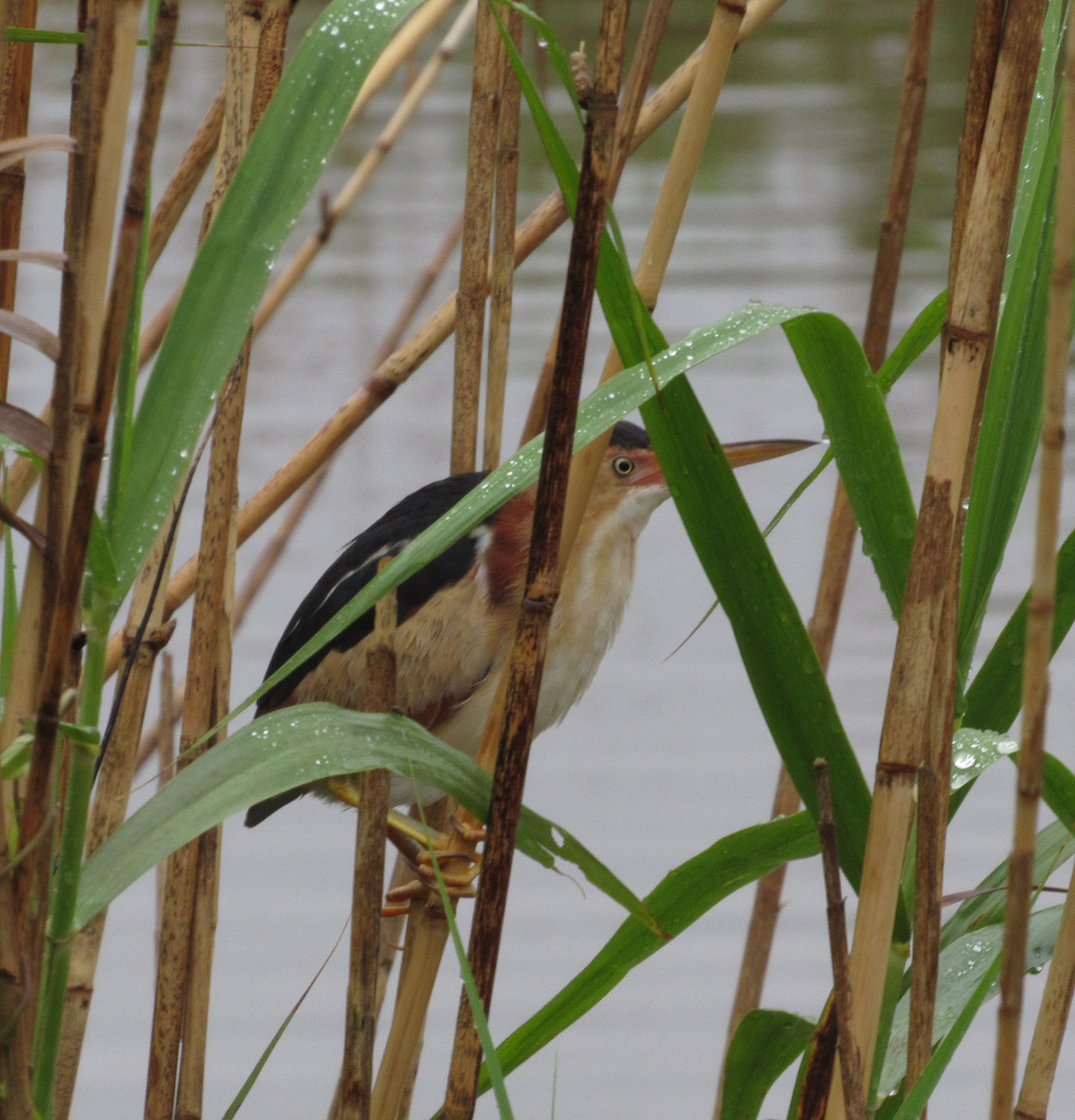
A Least Bittern hiding in the marsh.
– Credit: Aylett Lipford
Meet the Least Bittern!
This tiny heron is adapted for life in dense marshes. It is secretive, hiding in cattails and reeds.
But its cooing and clucking can be heard at dusk and dawn! It loves fish and insects.
They eat mainly small fish but can also eat frogs, snakes, salamanders, crustaceans, mice, and dragonflies! When hunting, they stand or perch on reeds, staying perfectly still, and jab at the prey with their bill.
The male does most of the work of building the nest, hiding it in tall marsh growth. The nests are elevated off the water and made out of woven vegetation. The birds also usually use vegetation to form a canopy over their nest!
LSU researchers have been studying how marsh loss in Louisiana is affecting this bird and other “secretive” marsh birds. They have found that the right water depth and vegetation are critical for this bird’s survival.
And what is cuter than this? Sometimes when startled, they pretend to be a reed — they extend their body and sway in order to camouflage!
Gemini
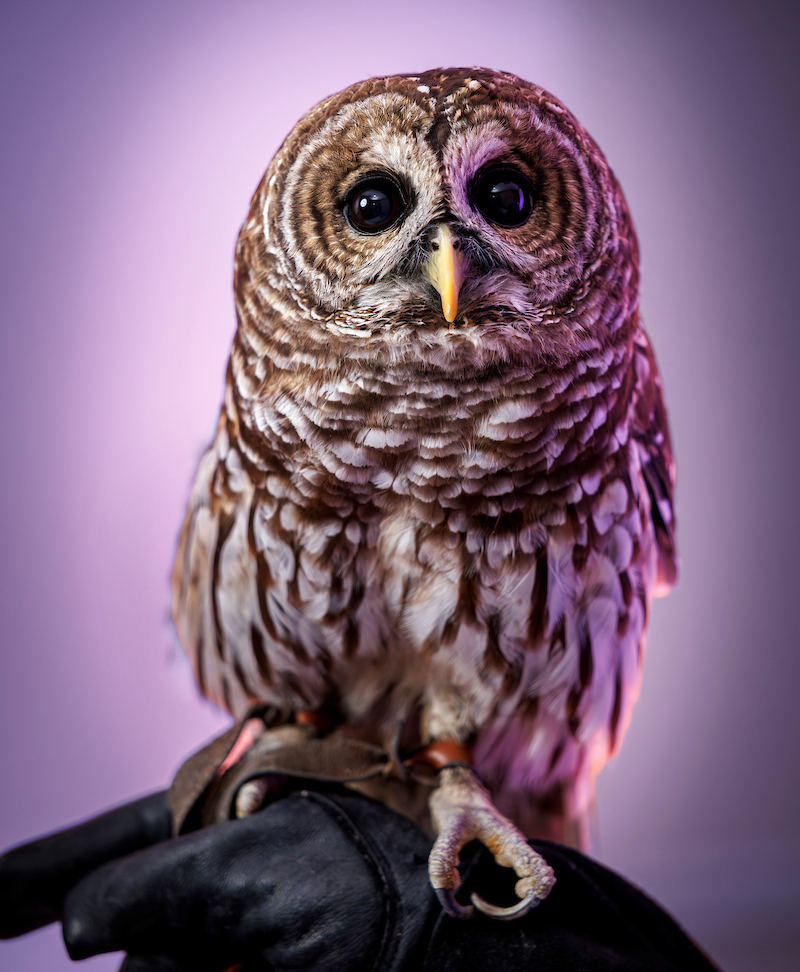
Barred owl
– Credit: Eddie Perez, LSU
Meet the Barred Owl!
Barred Owls love to cuddle and often bring each other presents (in the form of savory treats).
They eat lots of urban “pests” including small rodents.
The LSU School of Veterinary Medicine often treats and rehabilitates Barred Owls injured by cars and other trauma.
LSU researchers have found that Barred Owls will travel across multiple city areas in search of food, although may stay in the confines of a small forest area if food is plentiful.
It’s call is quite recognizable: “Who cooks for you?!”
Cancer
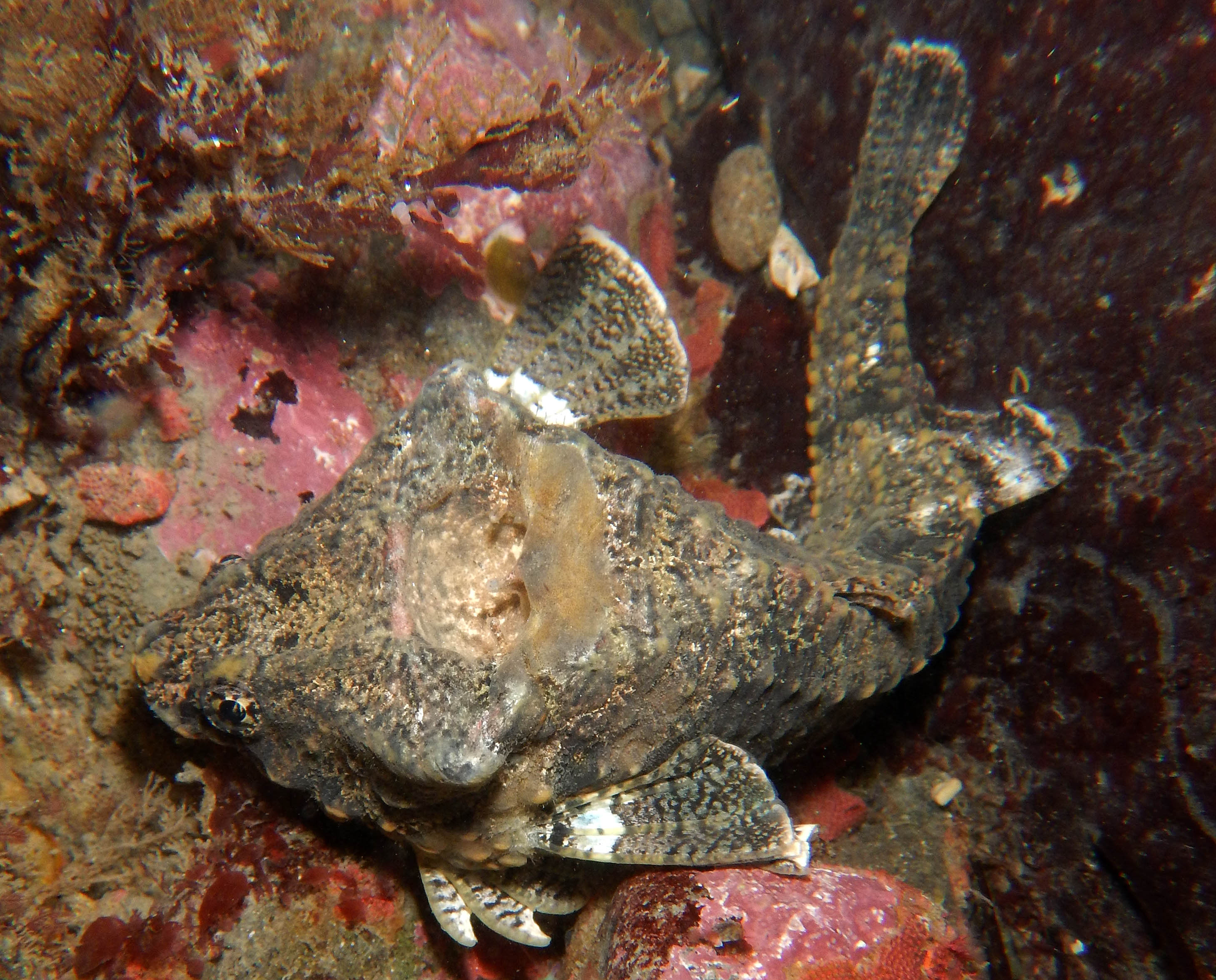
Rockhead poacher, Bothragonus swanii, photographed at Palmer's Point in California
– Credit: Mike Kelly (Used with permission)
Meet the Rockhead Poacher!
This cute little fish is an excellent communicator and, without a swim bladder, just likes to chill. What’s not to love?!
One of the most heavily armored little fish in the ocean, the rockhead poacher has become famous for its communication instrument of choice: the gaping hole in its head that acts as a drum.
As a graduate student at LSU, now alum Daniel Geldof noticed that the rockhead poacher’s first set of ribs is very large, flattened, and sits close to the hole or “pit” in its head without being physically attached to it. At the base of these ribs are tendons and muscles that suggest the fish can move the ribs deliberately and quickly against the bony base of the cranial pit — like drumsticks.
With its head-hole, the rockhead poacher can create vibrations that travel downward and through the rocky intertidal pool terrain that this fish calls home.
Leo
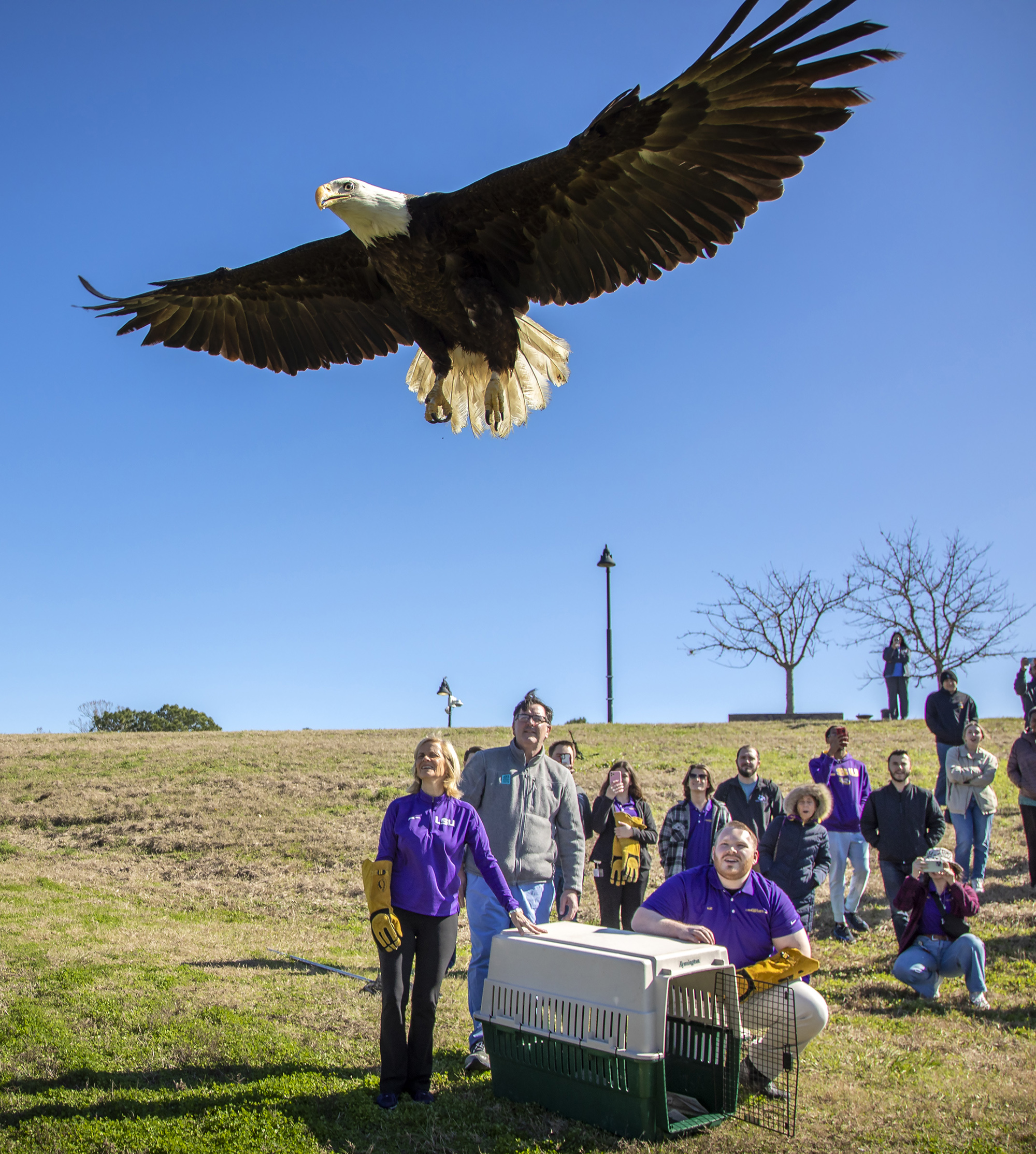
Kim Mulkey eagle release
– Credit: LSU VetMed
Meet the Bald Eagle!
These are definitely power couple vibes.
Bald eagles pair up with the same partner every season, so they always have their valentine. Their home is where their heart is; they build the largest nest in the world and it can weigh a ton!
Did you know? Adult bald eagle head feathers turn white when they are sexually mature.
LSU School of Veterinary Medicine's Wildlife Hospital actively rehabilitates injured bald eagles, releasing them back into the wild when they are ready.
Virgo
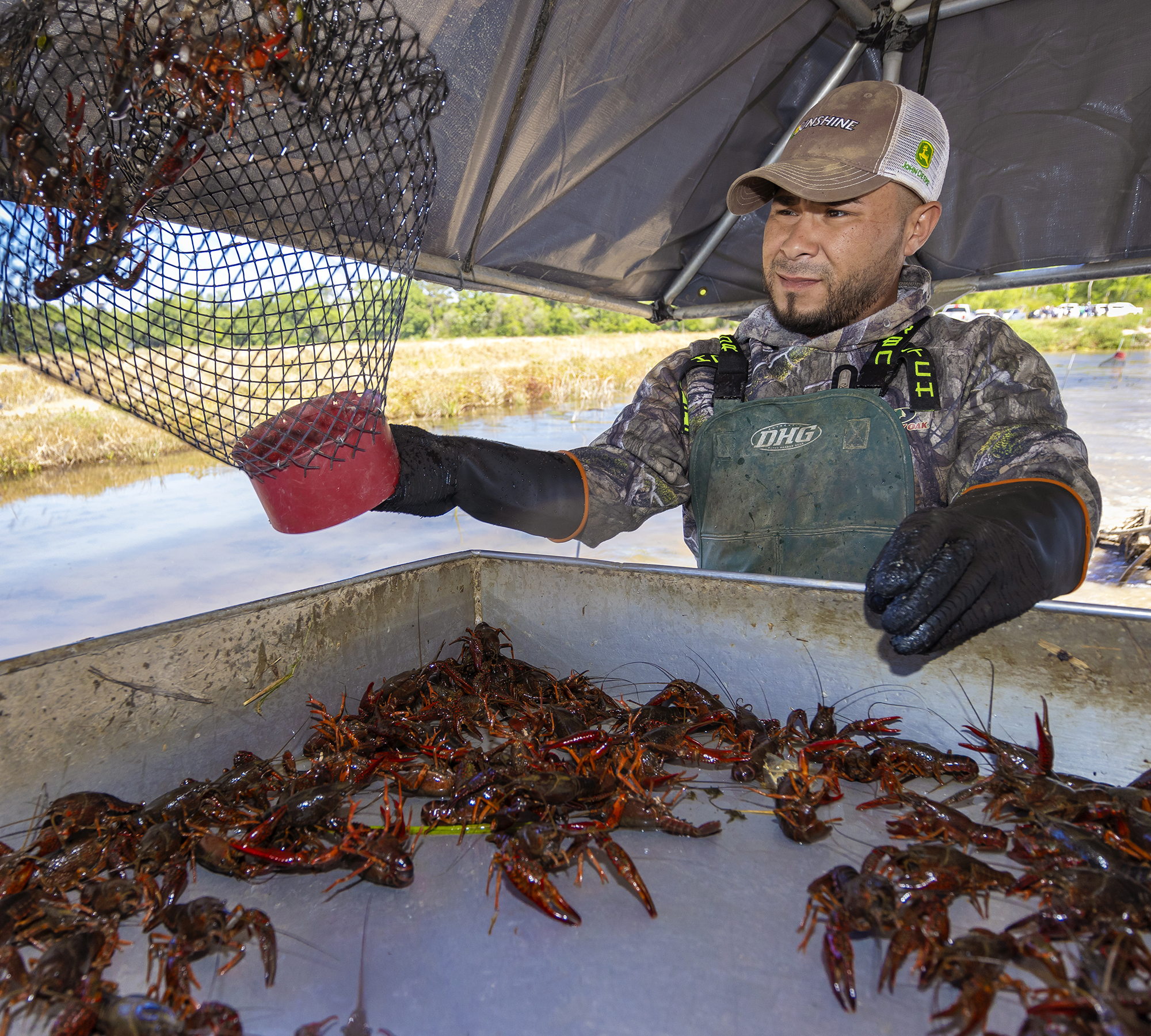
Red Swamp Crawfish
– Credit: LSU
Meet the Red Swamp Crawfish!
This next guest needs no introduction!
They love flooded wetland habitats and eat almost anything. They grow by molting and mature within a few months.
Did you know? Females must be slightly soft to mate, usually mating a few days after molting. They move into burrows to lay their eggs.
LSU researchers have found that crawfish are a “canary in the coal mine,” so to speak, for water quality. They are sensitive to mixed pollutants like microplastics.
Libra
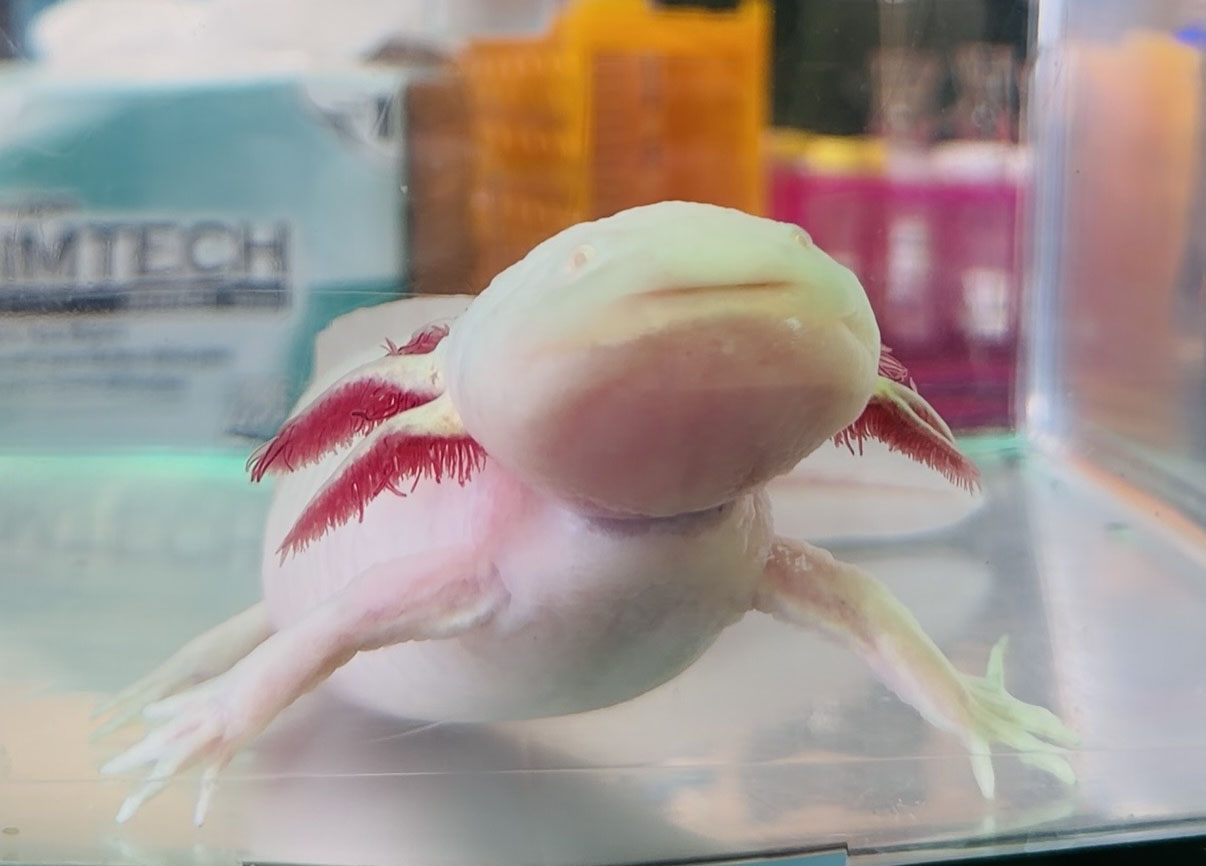
Axolotl
– Credit: Paige Jarreau
Meet the Axolotl!
What isn’t fun about the axolotl?!
It’s famous for its regenerative abilities — this salamander can regrow entire limbs and even parts of its organs, including parts of its brain.
It has a super large genome, which sometimes gives scientists who study their DNA headaches. They look like they are always smiling, they have feathery gills, and they are endangered, found only in Lake Xochimilco and its surrounding canals and waterways in Mexico.
LSU researchers just published some key research on the fact that axolotls inherited their regenerative abilities from their fishy ancestors — learn more here!
Sagittarius
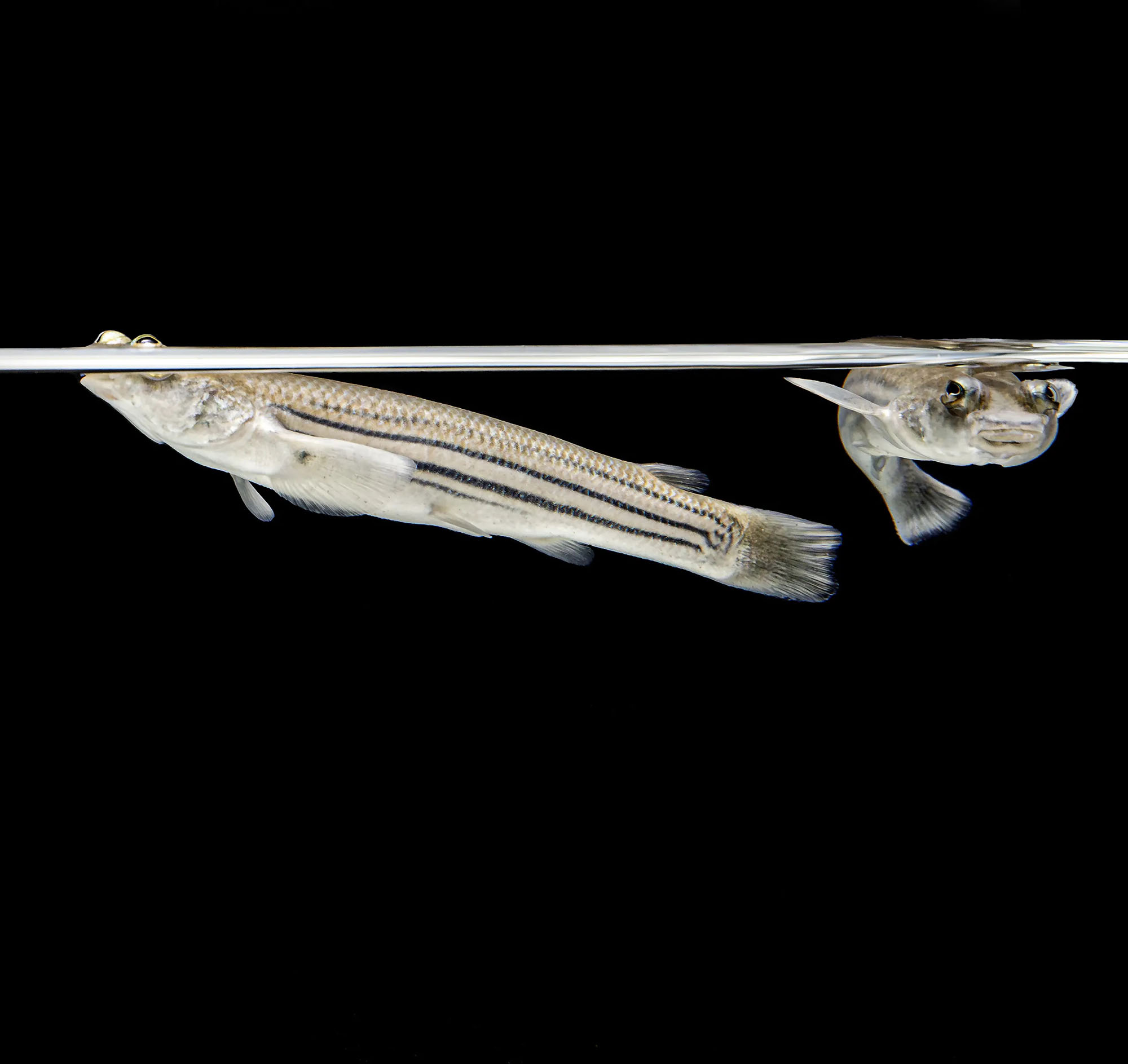
Four-Eyed Fish
– Credit: P. Schneider, LSU
Meet the Four-Eyed Fish!
These little weirdos are fascinating research subjects for Patricia Schneider’s lab at LSU.
Schneider studies the four-eyed fish, Anableps anableps, as a model for investigating innovations of the visual system.
These fish have very special eyesight capabilities. They can see above and below the waterline at the same time, and visual input from the air and the water are relayed to still-uncertain areas in the brain of this fish.
As for fun facts, these fish grow inside their mom’s belly (just like us!) They can walk out of the water to collect small crustaceans on land. They love eating insects, and they almost fly out of the water to catch them!!
Scorpio
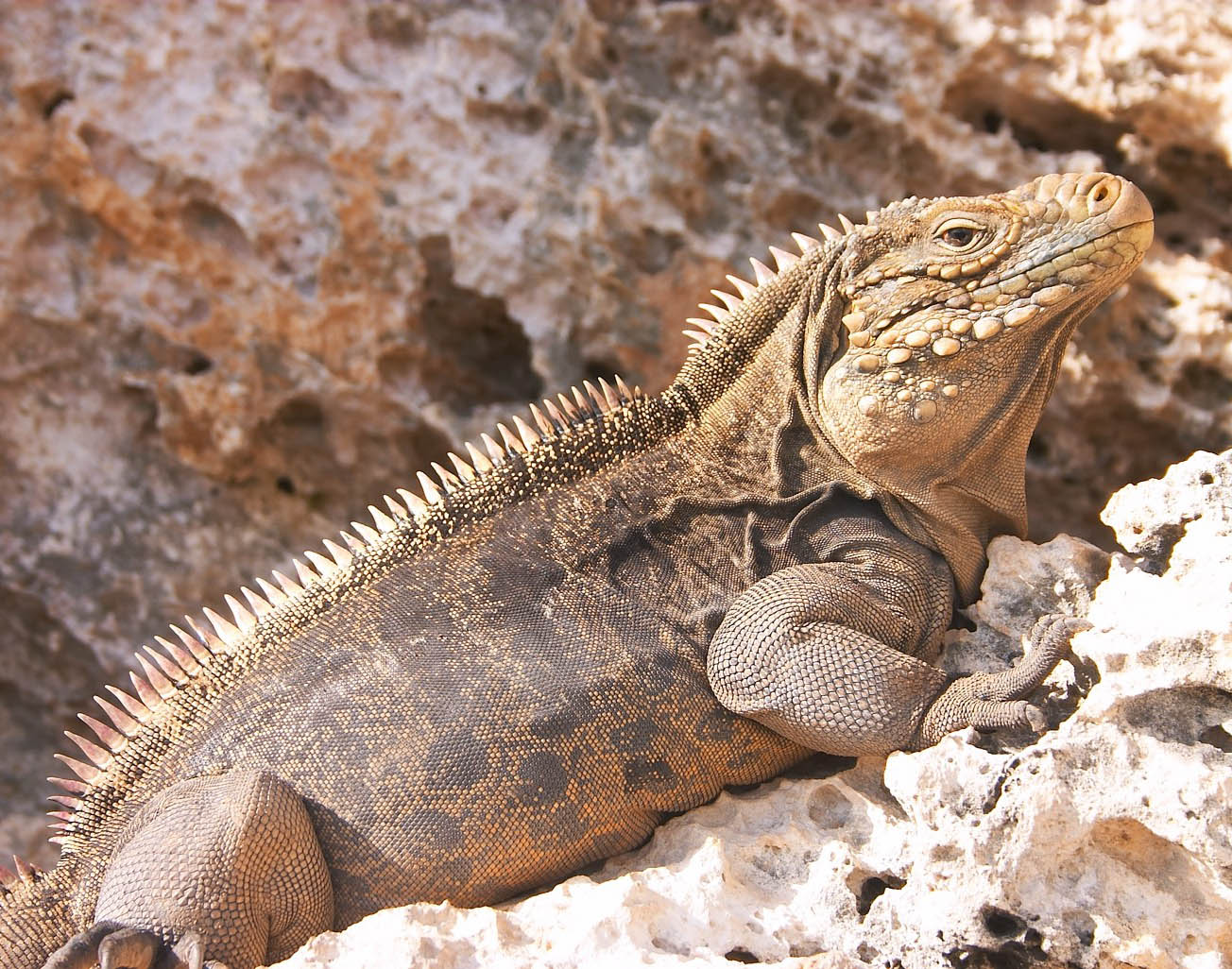
Rock Iguana
– Credit: Panther, Public Domain
Meet the Rock Iguana!
Rock iguanas are one of the most endangered species of reptiles in the world, so finding love for them is, literally, life or death.
Mark Mitchell, professor of zoological medicine at the LSU School of Veterinary Medicine, has conducted research on how to best protect these animals with assisted reproduction practices.
Want some fun facts? Rock iguanas are herbivorous, so don’t bring them flowers on a date… unless you want them to eat them!
Females will often go around looking for Mr. Right, “swiping their tail right” if he doesn’t meet their expectations.
Next Step
Discover stories showcasing LSU’s academic excellence, innovation, culture, and impact across Louisiana.