


From Minerals to Materials: “Our Proximity to the River, and Our Access to Low-cost Energy, Makes Louisiana Competitive”
March 23, 2026
John Flake, interim director of LSU’s Minerals Processing Institute, shares an industry outlook on Louisiana’s growing lead in critical minerals and materials.
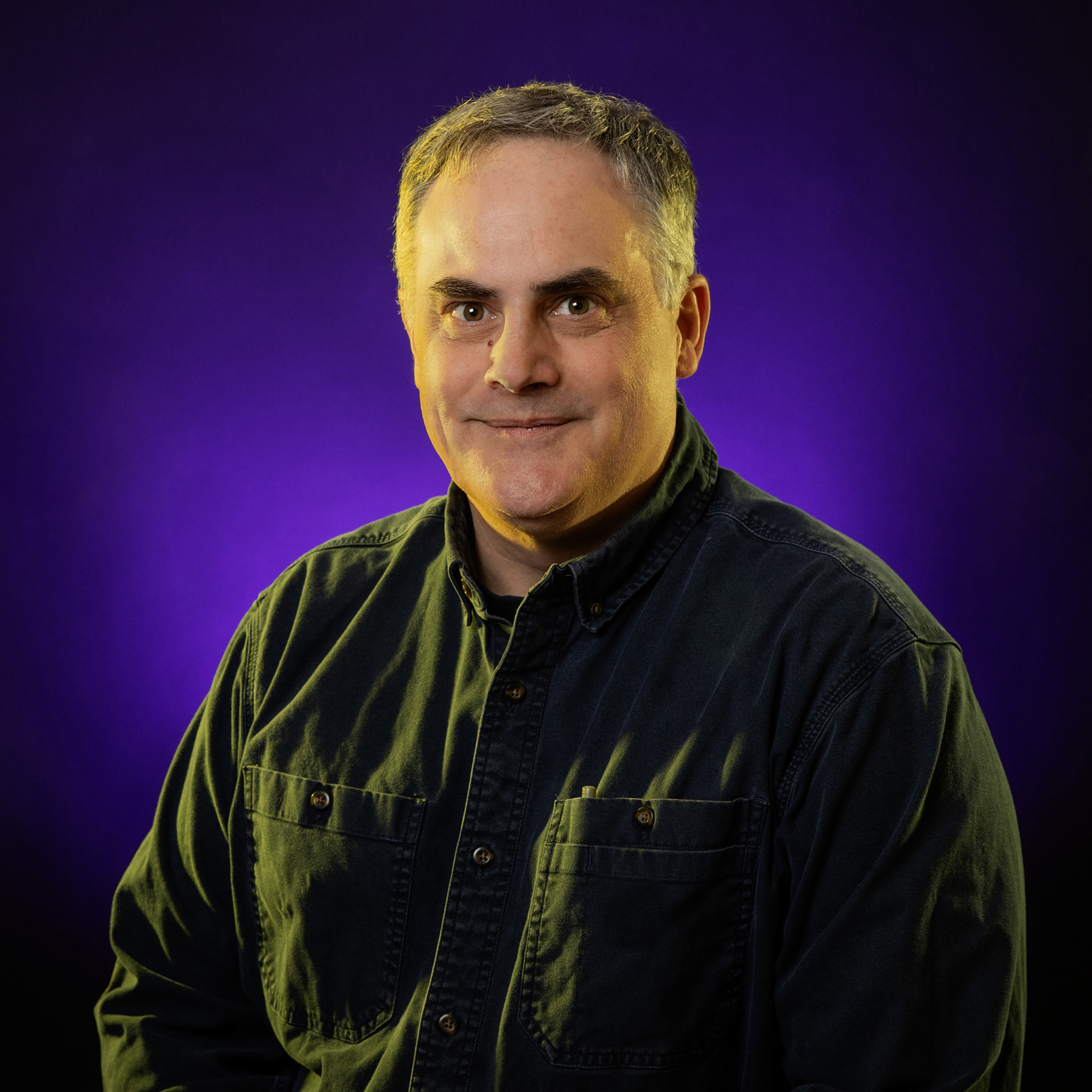
John Flake, Jesse Coates Professor and Jay Affolter Endowed Professor of Chemical Engineering, serves as interim director of the LSU Minerals Processing Institute
Where is Louisiana in helping the nation secure critical minerals and materials?
Louisiana is unique in the nation in this. Chemical processing is a huge industry here, at least $50 billion, some say over $80 billion, and critical minerals and chemical manufacturing are really tied together.
To give you some examples, you have Atalco Alumina in Gramercy. It’s the nation’s only aluminum refinery. Then you have Nucor Steel in St. James, which is one of only four U.S. producers of metallic iron from iron ore, and the nation’s only direct reduced iron (DRI) producer. In 2026, Hyundai Steel will be adding the nation’s second DRI production unit along with steel production—the first new American steel mill in more than 60 years—in Ascension Parish. Syrah’s processing plant in Vidalia, meanwhile, is the only U.S. facility that produces battery-grade graphite from carbon resources outside of China.
Another manufacturing plant in Louisiana, Koura, will become the first U.S. producer of lithium salts used in batteries. Likewise, Aclara Resources and UCORE are building heavy-rare-earth processing plants in Louisiana, which are needed for batteries, electronics, and defense applications. There’s also UBE, a Japanese company, that is opening a plant in Waggaman to make the electrolytes for lithium-ion batteries.
That’s my 30,000-foot view of what’s going on in critical minerals in Louisiana.
That’s a lot!
Yes, and there’s also a lot of brine processing that happens here. These are brines from underground, and we use it to make chlorine. I think we’re number one or two, nationally, in chlorine manufacture, and that’s used for safe drinking water, construction materials, a lot of things. The sodium hydroxide we make is also used in many different applications. Papermaking is a big one.
Some of these brines come from the Smackover Formation in North Louisiana, but it’s not all sodium and chlorine. There are a lot of other elements in there, including lithium. Whenever you drill for oil and gas, you almost always get some water, and that’s called produced water. It’s usually reinjected right back in, but this produced water is briny and has things like lithium in there. So, we have these natural resources, mostly from salt domes or saline aquifers. But the bigger opportunity for Louisiana is in minerals processing.
How is minerals processing different from chemical manufacturing?
The minerals processing looks a lot like chemical processing, but some of the raw material, instead of coming in a pipeline, it comes on a barge up the Mississippi River. It’s usually ores with low concentrations of whatever it is you want. And then we take those low concentrations and separate them and refine them into usable materials. We move them from raw materials into products.
One of the big examples of this is alumina. We take bauxite, which is alumina ore, and turn it into alumina, and then alumina is usually converted into aluminum somewhere else. The same with steel. We take iron ore and convert it into the precursor for steel. Historically, those things have been made somewhere else, but Hyundai is going to make steel here in Louisiana.
Gallium is another example. The bauxite we get, it has more than just alumina in there. It has other things, like gallium, scandium. There are rare earths in there. After we’ve taken the alumina out, we’ve just been piling what’s left over—the tailings. We’ve just been storing them on site. So, we have these huge reserves from 50-60 years of alumina processing, and the gallium has become extremely important. You need gallium for fast phone chargers, laptops. You need it for electric cars and ultrafast communications, including missiles and radar systems. Gallium shows up everywhere.
All these precursors, again, are tied to the chemical industry here in Louisiana. Our proximity to the river, and our access to low-cost energy, makes Louisiana competitive.
Tell me more about that.
It’s the economics. Sometimes it’s cheaper to do the processing in the country of origin, if you have the infrastructure there. A lot of battery materials, like cobalt, come out of Central Africa, and they do some of the early processing there. Because the concentration is so low, if you can run the concentration up from 100 PPM to 5% and then ship it, you save a lot of money compared to shipping all of it. But for processing, you need that infrastructure, you need all the other chemicals, you need the pipelines, you need the energy—all available on site. In the middle of Australia or the middle of Africa, you just don’t have that available, so it’s a lot easier to put everything on a barge and get it to Louisiana and let us do the processing.
What challenges does industry really have in doing minerals processing here in Louisiana? What do they need research to help solve?
We have to change the economics. Right now, it’s cheaper to buy critical materials from China because they already have the infrastructure and the supply chains. So, the biggest challenge isn’t necessarily technical, it’s in building up our domestic supply chains, and it might cost more because we have to pay for the infrastructure. But doing this by building on and around existing chemical industry makes it easier, and I think that’s why companies are locating in Louisiana. You can build on things you already have.
Then, the real differentiator of why a university should be involved is to increase the efficiency. There is a lot of variability in this stuff, in what comes out of the ground. Having a synchrotron like LSU gives you the ability to analyze what you have, and even though the elements may be exactly the same, they may be arranged differently.
Much of the processing technology used today is 1950s technology. That’s something we can help refine and evolve. We can also use different separation techniques that don’t involve boiling off the water and using acids and bases. Instead, we can use separation technologies like membranes that are capable of separating out some of these heavy rare earths, like yttrium and erbium. We can use electrolysis, electro migration like reverse osmosis or dialysis, where you take the salt out of an aqueous solution. Well, some of these cations, the metal ions, may travel faster or slower in a polymer, so we can take advantage of that and use that as a way to separate. That’s a lot more energy efficient than using acids and bases.
Can you put this into the context of LSU’s recent research agreements with national labs, like Argonne National Laboratory, Idaho National Laboratory, and Oak Ridge National Laboratory?
Buying critical materials from China hasn’t been much of an issue until now, and there hasn’t been much federal investment in critical minerals processing, especially in the Gulf region. The role of the national laboratories is to develop the technologies the country needs to secure itself, from an energy but also from a national security perspective. Meanwhile, the Department of Defense doesn’t do minerals processing. Even the Department of Energy doesn’t really do mineral processing. Where this is happening is on the Gulf Coast, and there is no Department of Energy field site south of Oak Ridge National Laboratory in Tennessee. So, if the federal government wants to catalyze American industry around this, it makes sense to do it here, in Louisiana, in partnership with LSU.