

LSU Students Bring Research-Driven Design to Our Lady of the Lake Emergency Department
March 24, 2026
Emergency departments are designed to save lives—but for patients and families, they can also be some of the most confusing and emotionally overwhelming spaces in healthcare. Unclear signage and layouts, not to mention a busy and high-stress environment, often add anxiety at the very moment people need clarity and reassurance the most.
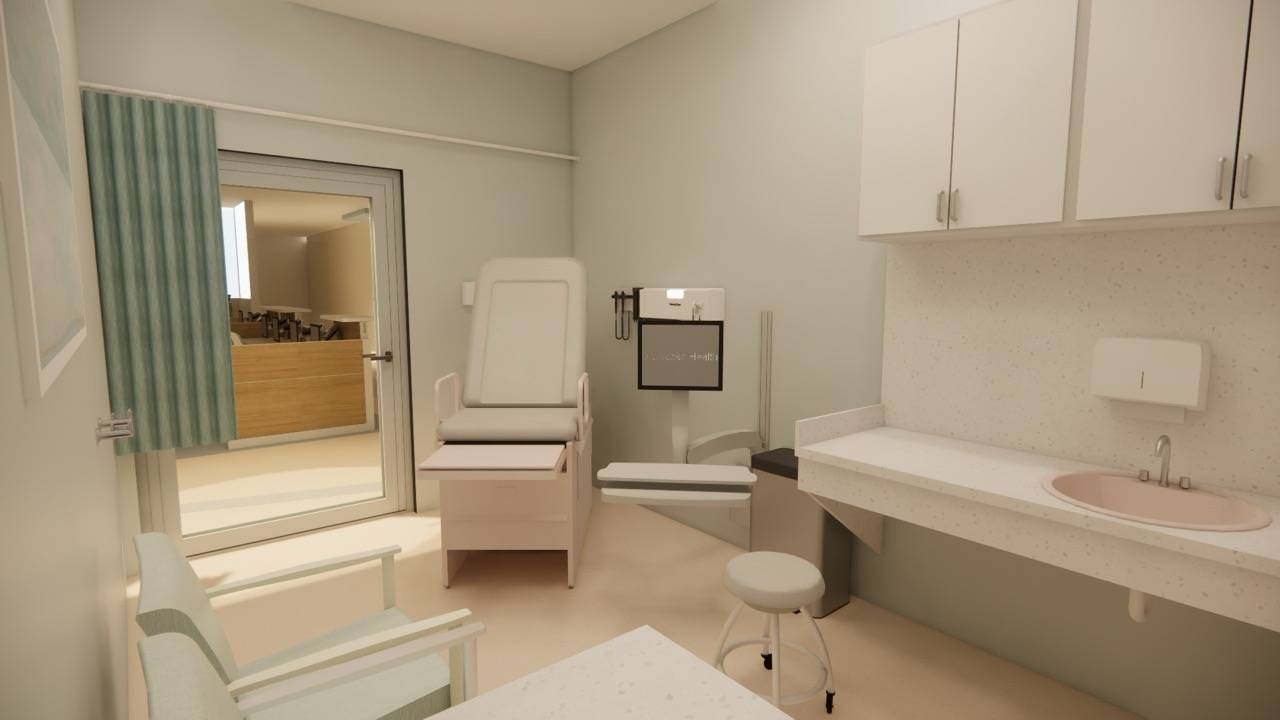
One of the proposed redesigned exam rooms for Our Lady of the Lake Regional Medical Hospital.
Looking to address these challenges, FMOL Health | Our Lady of the Lake Regional Medical Center partnered with LSU’s interior design program, where students were given the opportunity to redesign the hospital’s emergency department (ED), not as an exercise, but to update the space. The School of Design’s work is part of a major, $55 million ED renovation at the hospital, designed to expand capacity, integrate advanced technology, and improve the patient and caregiver experience.
“Ultimately, the intent was to soften the negative emotions often associated with hospitals by designing an environment that felt calmer, more supportive, and easier to navigate for everyone using the space,” said Stephanie Wilson, an LSU interior design senior from Mandeville.
Working directly with hospital leadership, nurses, and staff, the student teams studied how patients and providers moved through the space, identified pain points in navigation and workflow, and developed a design strategy focused on clarity, efficiency, and emotional support.
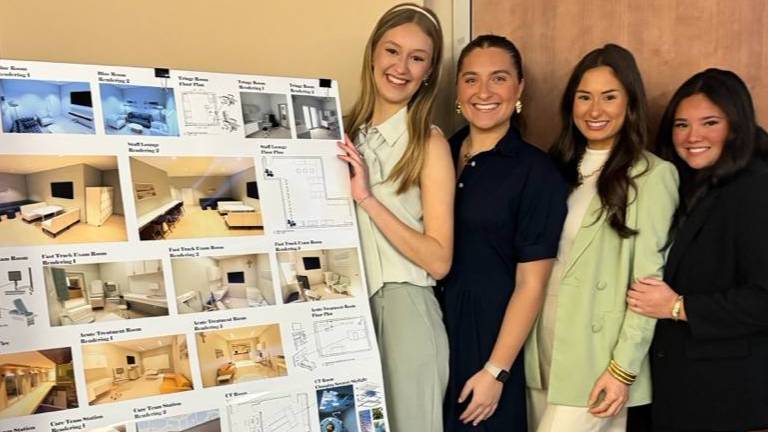
Stephanie Wilson, Mia Foremaster, Amber Moreno and Alicia Geeslin, all fourth year interior design students, with their proposed redesign for Our Lady of the Lake Regional Medical Hospital.
“As interior designers, our responsibility is to protect the health, safety, and welfare of everyone in the space, which is critical in emergency departments where design decisions can influence comfort, efficiency, and even outcomes during urgent care situations,” said Alicia Geeslin, an LSU senior from Mandeville, Louisiana.
“Our Emergency Department Reimagining project is so important for this community. I knew that we had one chance to get it right, and I also knew that I wasn’t an expert in interior design. Leaning into the partnership with LSU was a no-brainer. By combining our clinical and operational expertise with their design vision, the environment and the care will be best-in-class,” said Dr. Mark Laperouse, Emergency Department Medical Director at FMOL Health | Our Lady of the Lake.
The result was the students producing research-driven interior design proposals that improves wayfinding, streamlines staff movement, and softens the clinical feel of the environment—without sacrificing functionality or safety.


LSU interior design students with Emergency Department Medical Director at FMOL Health | Our Lady of the Lake, Dr. Mark Laperouse, LSU Professor Julie Elliot, and President of OLOL Foundation Ann Marie Marmande
“Clear wayfinding helps patients and families feel less overwhelmed during already stressful situations, while efficient layouts support faster movement and decision making for medical staff. Lighting, materials, acoustics, and color choices can reduce fear and sensory overload, helping create a calmer and more supportive environment,” said Amber Moreno, a senior from Ponchatoula, La.
The collaboration highlights the value of LSU’s Interior Design program in preparing students to solve complex, high-stakes problems—bridging academic training with professional practice and delivering meaningful benefits to communities across Louisiana.
“This kind of project represents what interior design education at LSU is truly about—helping students connect research, empathy, and technical skill to real people and real needs,” said Marsha R. Cuddeback, director and professor in the School of Interior Design. “Watching them work alongside healthcare professionals, ask thoughtful questions, and develop meaningful design responses shows just how prepared they are to enter a profession centered on protecting health, safety, and well-being. I’m incredibly proud of the care and responsibility they brought to this work.”
The ED renovation is already underway. The three main takeaways from the presentations were:
- The use of water imagery and colors for a calming space
- The introduction of transom windows, specifically in the nurse team stations and the consult rooms
- Adding interesting ceiling elements
The students said they enjoyed the experience and said the project pushed them to a higher standard, as well as take ownership of their work, and gave them confidence when they step into professional practice.
“For the state and potential partners, these projects provide fresh research-driven design thinking while allowing students to work on real problems that directly impact communities. By partnering with schools such as LSU, organizations gain access to thorough analysis, observation-based insights, and thoughtful design solutions grounded in safety, accessibility, and efficiency,” said Mia Foremaster, a senior from New Orleans.
“At the same time, students gain professional-level experience working within real constraints, stakeholder input, and operational needs. This type of partnership strengthens workforce development, supports innovation in public spaces like healthcare facilities, and ensures future designers are prepared to contribute meaningfully to projects that affect health, safety, and overall quality of life across the state,” Geeslin said.