
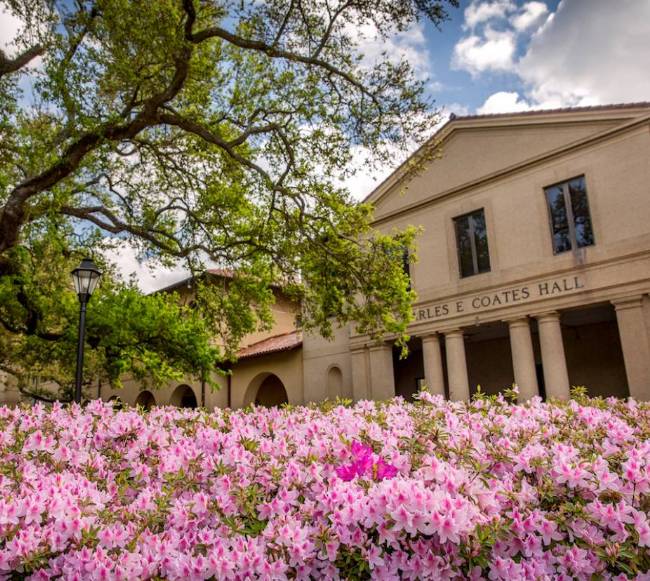


Marine Corps Heritage Foundation Honors LSU Military Museum with Magruder Award
April 13, 2026
The Marine Corps Heritage Foundation has chosen James P. Gregory Jr. as the recipient of the Colonel John H. Magruder III Award, making the William A. Brookshire LSU Military Museum the first university museum in the world to achieve this honor. The award, given for the museum’s “Tigers in the Pacific” exhibit, recognizes the best exhibit on Marine Corps history, whether at a national or international museum.
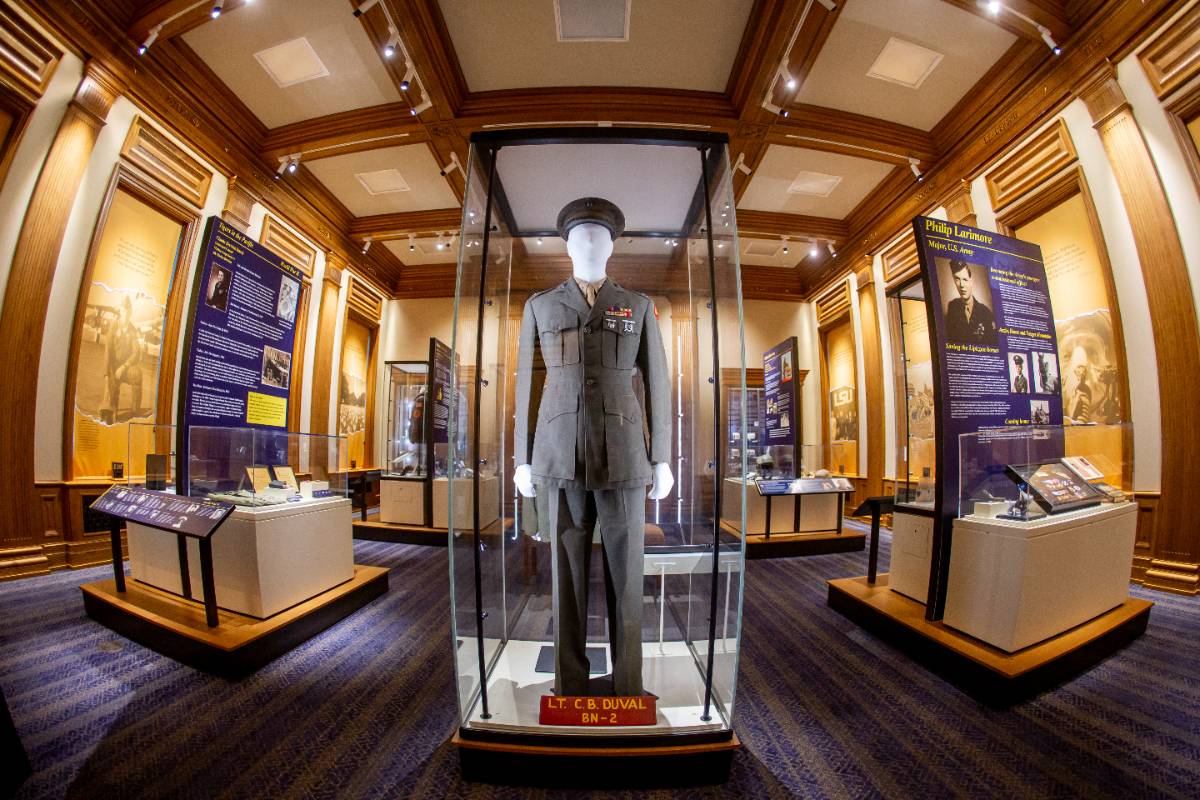
The William A. Brookshire LSU Military Museum won an award from the Marine Corps Heritage Foundation for their exhibit "Tigers in the Pacific," making it the first university museum in the world to achieve this honor.
Created for the 80th anniversary of the Battle of Iwo Jima, the “Tigers in the Pacific” exhibit focuses on the people of war. The exhibit highlights Claude and Stanwood Duval, brothers who left their education at LSU to serve in the 4th Marine Division during World War II. Through generous family donations, visitors can trace their journey from the classrooms to battle through personal letters and artifacts. The exhibit was expanded to include the stories of 12 other LSU Marines who fought on Iwo Jima, including Graves B. Erskine who commanded the 3rd Marine Division.
“Out of the 14 total Marines, four lost their lives in the battle, so we honor their sacrifice by continuing to tell their stories," said James P. Gregory, director of the William A. Brookshire LSU Military Museum. “The message of the exhibit, and indeed the museum, is to demonstrate not only the stories and sacrifices of our veterans, but also to show the reach LSU has had, especially in the Marine Corps.”
While many universities have rich military histories, LSU is the first university to dedicate a standalone museum, with staff and academic resources to preserve that legacy.
“The role of this museum is to honor and showcase the service of all LSU students, faculty, and staff that have served in the military. LSU has its roots as a military institution, and we continue that tradition,” Gregory said.
The museum’s mission is not to display objects behind glass, but to make emotional connections ensuring when visitors walk through the doors, they leave not just remembering what they saw, but who they learned about.
“We have been working to update and rotate our exhibits to be more story-driven. I would rather visitors leave with an interesting, inspiring, and emotional story rather than just the experience of ‘I saw a helmet.' I hope they leave with not only a better understanding of LSU's rich military history, but also an appreciation for the work we do to preserve and share stories,” Gregory said.
In addition, the museum also serves as a place of learning where students don’t just visit; they participate. Through various internships, volunteer opportunities, and public outreach with local schools and LSU classes, they become part of the process of preserving this history.
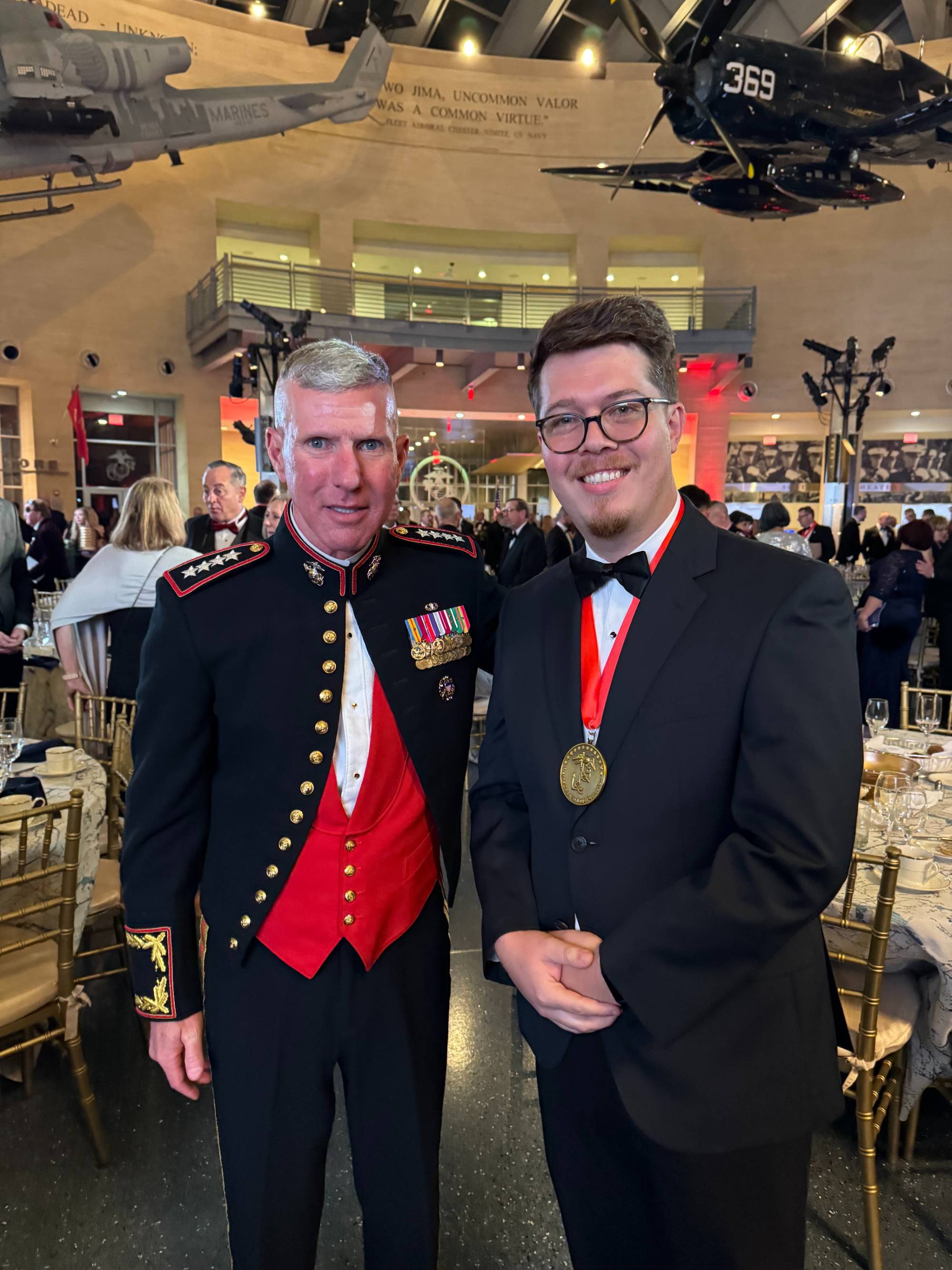
James Gregory with with Commandant of the Marine Corps, General Eric Smith, accepting the Colonel John H. Magruder III Award.
While the Magruder Award is the museum’s first national award, it is not its first recognition of excellence. In 2022, Gregory won the Colonel Robert Debs Heinl, Jr. Award from the Marine Corps Heritage Foundation for his article, "A Calamity of Errors: The Untold Story of the 5th Regiment at Blanc Mont Ridge on 4 October 1918."
With awards for both research and an exhibit, Gegory hopes this will encourage more members of the public to come forward with family histories, artifacts, and stories waiting to be told.
Gregory traveled to Quantico, Virginia to formally accept the Magruder Award.
The museum is currently working on their next exhibit. On April 22nd, the museum will open its newest exhibit featuring artifacts recovered from the site of the original LSU campus in Pineville, LA., the Louisiana State Seminary of Learning & Military Academy. Unearthed in an archaeological dig of the site by graduate student Conan Mills, the artifacts are now housed in the museum. They will be on display for the public to see for the first time since the building was destroyed in 1869.
As the museum gains national recognition, Gregory sees the award not as a finish line, but as motivation to keep pushing forward.
“The key is to never rest on your laurels,” he said. “Just because we won an award does not mean that it automatically translates to other projects. We will continue to do our best in our research and creation regardless of past recognition, and I hope we will continue to achieve the same level or exceed it moving forward.”