
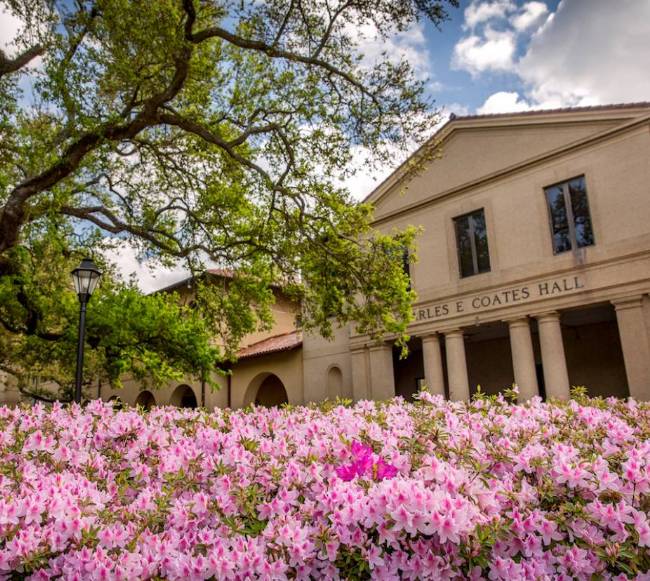


A Legacy of Care: How LSU Vet Med Protects the ‘Sportsman's Paradise’
April 14, 2026
Known as the Sportsman’s Paradise, Louisiana built its identity on its deep connection to the environment and animals. However, that environment is both its greatest asset and its biggest vulnerability. The warm climate, wetlands, and frequent storms that support its wildlife and agriculture also fuel disease spread, animal displacement, and ongoing health risks, placing the state at the center of two major veterinary challenges.
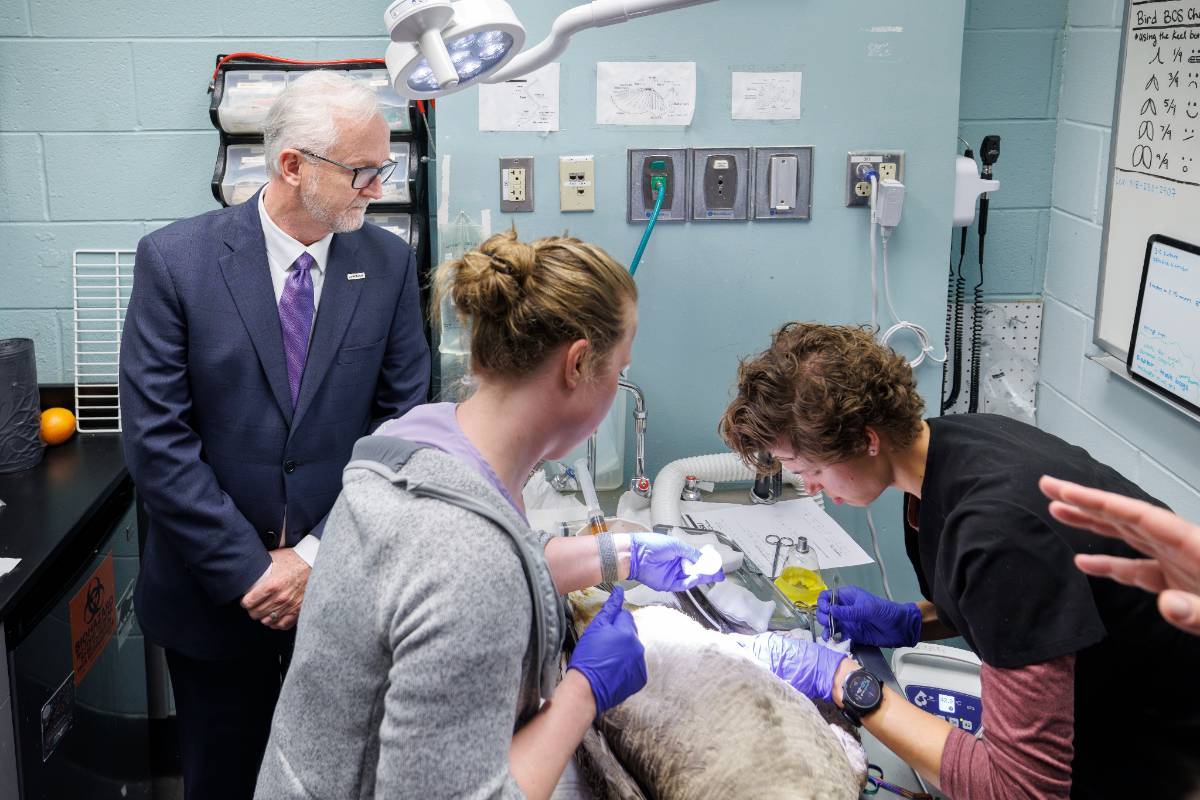
LSU Chancellor Jim Dalton observes a medical procedure on a wildlife patient at LSU Vet Med.
Louisiana’s climate makes it a breeding ground for vector-borne diseases such as the West Nile virus and leptospirosis, which threaten the state’s wildlife, livestock, and human health. At the same time, many rural communities within the state face limited access to veterinary care, leaving a gap in animal health services that are critical to the state’s economy and way of life.
Positioned at the intersection of these challenges is the LSU School of Veterinary Medicine (LSU Vet Med). Through education, research, and outreach, LSU Vet Med professionals serve as both frontline responders and long-term partners. They work to fill critical gaps in rural care, respond to disasters, combat disease, protect food security, environmental sustainability, and economic stability, making the school an essential asset to the state.
As the state’s only veterinary school, LSU Vet Med trains future veterinarians and biomedical professionals using the “One Health” approach: the idea that the health of animals, people, and the ecosystem is interconnected. In a state where wildlife, agriculture, and communities overlap, this approach is not just valuable but necessary.
Building on this foundation, LSU Vet Med recently revised its curriculum to emphasize hands-on clinical training and interdisciplinary collaboration. Students collaborate with the LSU College of Science, LSU AgCenter, Pennington Biomedical Research Center, and the LSU Health Sciences Centers, gaining the skills needed to address health challenges across species and sectors.
“I came to LSU Vet Med knowing no one but quickly found a family that challenged and supported me every step of the way,” said Shaye Alost, President of the LSU Vet Med chapter of the Student American Veterinary Medical Association. “I’ve grown in confidence, leadership, and compassion—not just as a future veterinarian, but as a person. LSU has shown me that veterinary medicine is built on community and has inspired me to go forward in my career serving both animals and the people behind them.”
LSU Vet Med’s diverse clinical caseload reflects Louisiana itself, giving students exposure to companion animals, livestock, equine medicine, and wildlife care.
With more than 3,500 Doctor of Veterinary Medicine (DVM) graduates, LSU Vet Med has built a network of professionals who serve in nearly every parish. In rural areas, these veterinarians are essential to supporting livestock health, sustaining agricultural operations, and ensuring access to care where it might otherwise be unavailable.
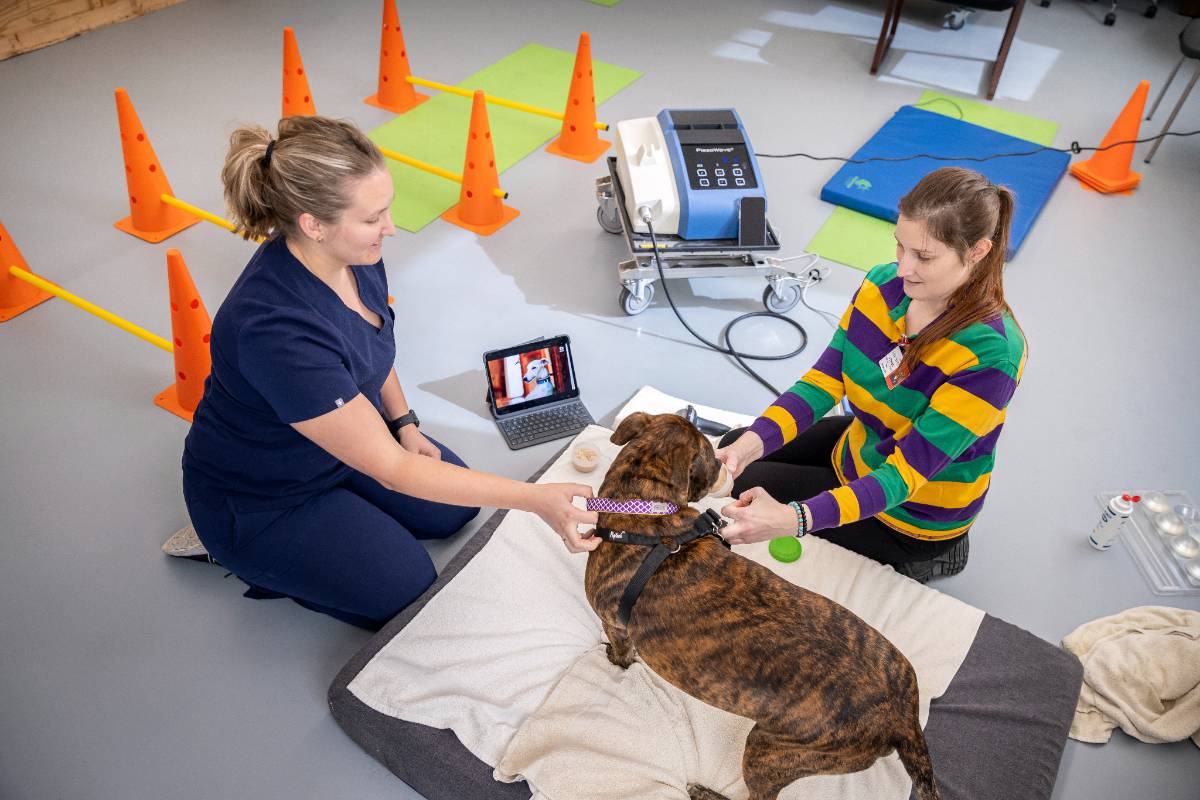
A dog receives care at the LSU Vet Med Stephenson Pet Clinic.
LSU Vet Med graduates continuously expand the role of veterinary medicine beyond private practice. Many alumni work in public health, research, and food safety, while others contribute to industries such as poultry, beef, and pet food production. Some even serve at the federal level as inspectors for governmental regulatory agencies, conducting research that affects human and animal health, and providing diagnostics.
The impact of LSU Vet Med extends statewide and is felt most clearly in times of crisis. During the early days of the COVID-19 Pandemic, LSU Vet Med researchers provided critical testing and support for hospitals and first responders, demonstrating how veterinary expertise can directly support human health.
Similarly, in the wake of major hurricanes and floods, from Katrina to more recent storms, faculty and students have rescued and cared for thousands of displaced and injured animals. These efforts not only protect animal welfare but also help families, farmers, and entire communities recover more quickly.
In collaboration with the Louisiana Department of Wildlife and Fisheries, students and faculty also rehabilitate injured wildlife, connecting classroom learning directly to conservation efforts that support tourism and outdoor industries statewide. The Louisiana Animal Disease Diagnostic Laboratory (LADDL), part of LSU Vet Med, provides disease surveillance for Louisiana and beyond. By identifying threats early, the lab helps prevent outbreaks that could impact public health, agriculture, and the state’s economy.
“Louisiana State University plays an essential role in wildlife health by supporting Louisiana Department of Wildlife and Fisheries (LDWF) conservation and management efforts,” said Jonathan L. Roberts, State Wildlife Veterinarian with the Louisiana Department of Wildlife & Fisheries. “From diagnostic services provided by the Louisiana Disease Diagnostic Laboratory (LADDL) to the expertise provided by the LSU SVM Wildlife Hospital, the LSU support enables our agency to provide timely surveillance and rapid response to existing as well as emerging threats to the health of Louisiana wildlife.”
In addition, LSU Diagnostics is currently monitoring Chronic Wasting Disease with LDWF, the fatal, contagious neurological disease that affects deer. These partnerships enable faster detection, coordinated responses, and stronger protection of Louisiana’s natural resources.
“An LSU-LDWF partnership is necessary for the management and conservation of our state’s valuable natural resources, ensuring that those resources will be available for future generations,” Roberts said. “As the Louisiana flagship land-grant university, LSU has a personal investment in the health, conservation, and management of Louisiana wildlife. Everyone who lives in or visits Louisiana benefits from the services provided by an LSU-LDWF partnership, because wildlife is in everybody’s backyard, including ours.”
This collaboration reflects the core principle of One Health: that protecting animal health ultimately protects people, communities, and the environment.
The commitment to Louisiana’s needs is driving LSU Vet Med’s next chapter. Outlined in its 2025-2030 Strategic Plan, Taking Flight, the school is investing in the future of One Health and disease preparedness through major new facilities, including a free-standing Wildlife Hospital and state-of-the-art Equine Center of Excellence.
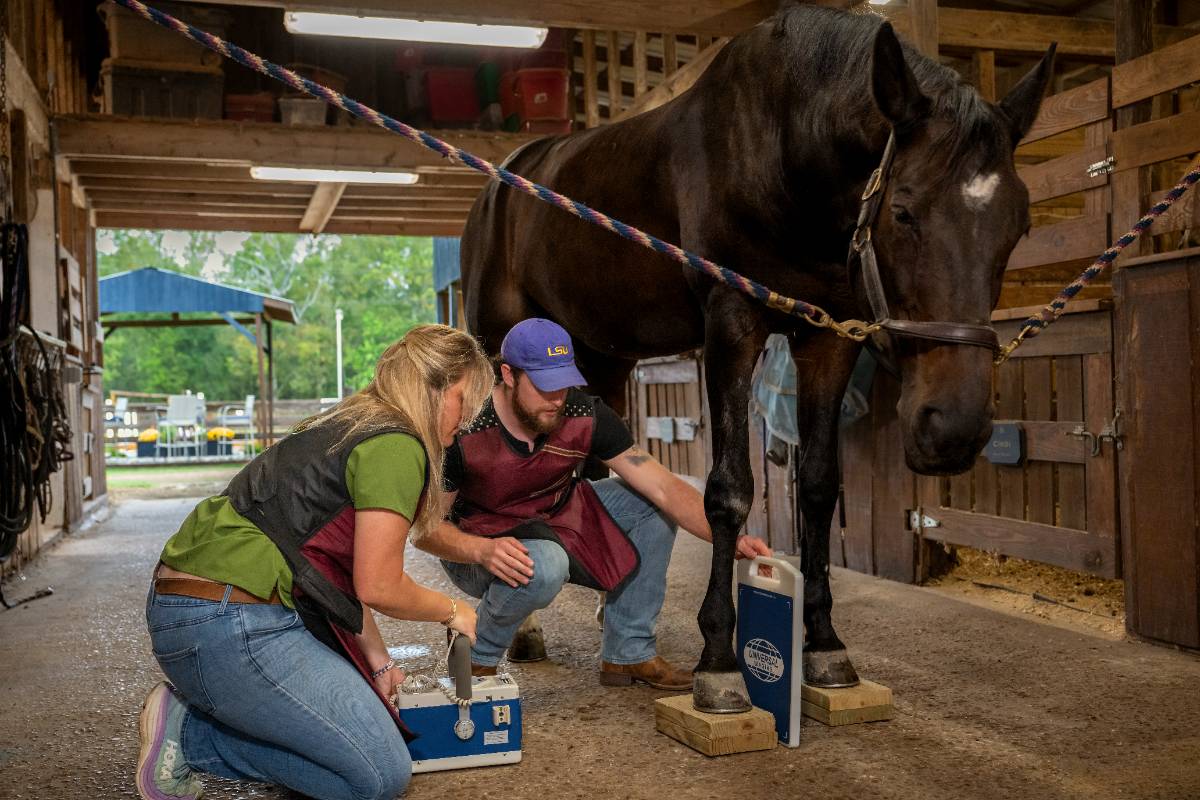
LSU Vet Med alum Dr. Josie Cormier and LSU alum Peyton Todd take X-ray images of a horse.
To meet the growing demand for wildlife care, Vet Med is expanding its Wildlife Hospital, which currently sees over 1,500 animals each year, into a free-standing facility. The new facility will allow LSU Vet Med to treat more complex cases, enhance student training in wildlife medicine, strengthen partnerships with state agencies, and protect the various ecosystems that sustain tourism, hunting, fishing, and agriculture statewide.
Simultaneously, Vet Med is investing in a new Equine Center of Excellence designed to support the industry tied to horse racing, recreation, and agriculture. The center will also expand research and training opportunities, helping veterinarians better serve horse owners across the state while strengthening a key part of Louisiana’s economy.
LSU Vet Med is developing the next generation of veterinarians and biomedical scientists to deliver service to Louisiana: diagnosing and treating sick animals, ensuring food security, advancing One Health outcomes, engaging with our communities, and contributing to the economy of Louisiana and its citizens.