

LSU Process Makes Wood Up to Eight Times Stronger
May 04, 2026
Coastal areas desperately need building materials that can withstand extreme weather.
LSU Civil and Environmental Engineering Assistant Professor Hai “Thomas” Lin and his PhD student Waleed Zaid have developed a treatment that makes wood as stiff as concrete and several times stronger than untreated lumber. Widespread adoption of the innovation could mean far more hurricane-resistant housing and more resilient coastal communities.
“It’s a simple, two-step process. First we soak the wood in a tank filled with water and non-toxic chemicals. This removes some of the lignin, the natural glue that binds the wood fibers together,” Lin said. “Then we compress the wood under high pressure at 100°C, the same temperature at which water boils. The pressure collapses the cell walls and tightly packs the wood fibers.”
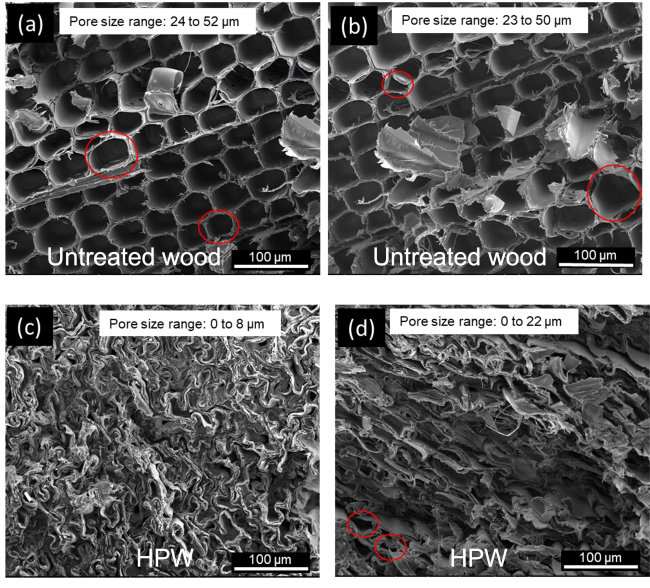
LSU's treatment process collapses cell walls, tightly packing wood fibers to create building materials eight times stronger than untreated lumber.
The result is wood eight times stronger than untreated lumber, lab tests show. Lin and Zaid named their startup and its product EnduraWood.
So far, however, they have only tested smaller pieces of EnduraWood. Full-sized sheets of plywood and lengths of lumber, like those used in construction, will probably be about four times as strong. Still, the researchers believe EnduraWood can find a home in the Gulf Coast’s residential construction industry.
“It’s the first market we will target,” Zaid said.
The U.S. market for pressure-treated lumber was valued at $4.2 billion in 2024 and will rise to an estimated $6.1 billion by 2033.
“EnduraWood clearly illustrates how LSU research can translate directly into coastal resilience and economic opportunity,” Vice Chancellor of Research and Economic Development Robert Twilley said. “By turning a lab discovery into hurricane-resistant housing, we strengthen our infrastructure, communities, and economy. It’s exactly the kind of impact LSU delivers for Louisiana and the world.”
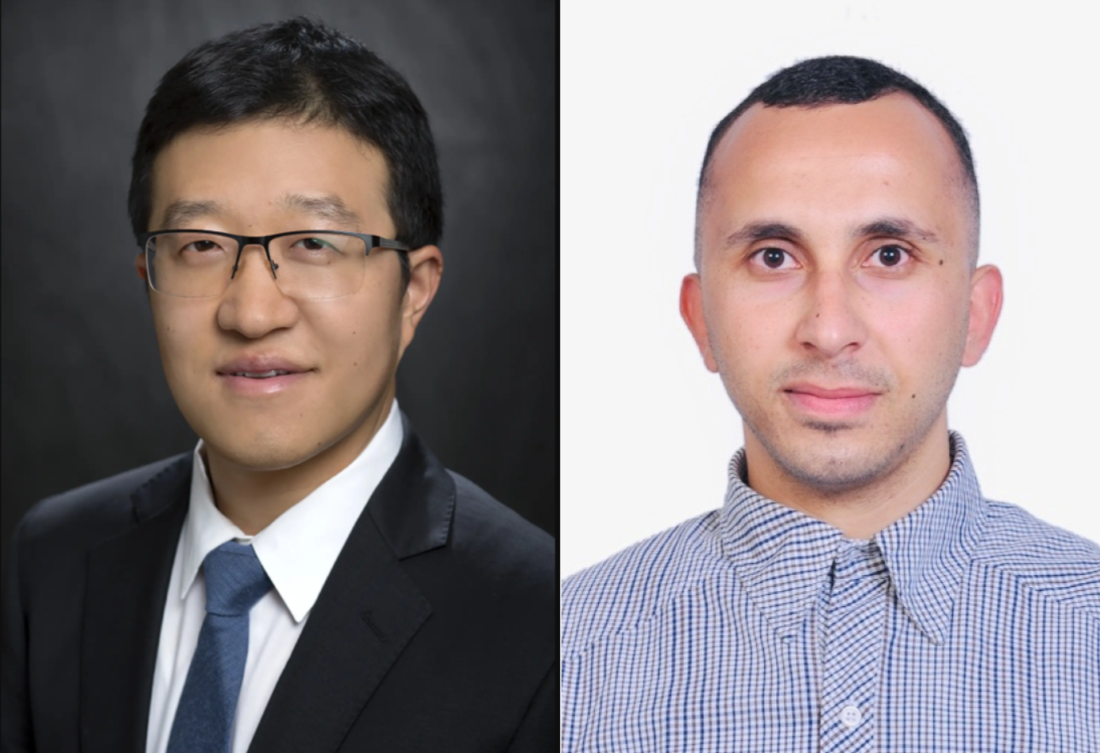
LSU Civil and Environmental Engineering Assistant Professor Hai “Thomas” Lin and his PhD student Waleed Zaid
The researchers refined their business model through the National Science Foundation (NSF) I-Corps program, an immersive entrepreneurial training program that helps scientists transform inventions into commercial products.
Lin and Zaid first looked at using EnduraWood to make the pilings that support waterfront infrastructure, bridges, and large buildings. They saw it as an economical replacement for concrete.
However, their potential customers – Zaid interviewed more than 100 during I-Corps – told them they should focus on the residential construction industry.
“Some customers said they would pay up to twice as much for materials proven to withstand flooding, moisture, and termites,” Zaid said.
License this Invention
LSU, through its Office of Innovation & Technology Commercialization (ITC), is seeking partners to help bring the discovery to market. For licensing inquiries, contact techlicensing@lsu.edu
Proving EnduraWood can meet those standards will require more extensive testing, which will require investment.
The team is now seeking NSF Technology Transfer Partnership funding to conduct environmental testing for mold and termite resistance and to secure industry certifications. They need an industry partner to qualify for the grant and hope that collaboration will help take EnduraWood from the lab bench to coastal construction sites.
The researchers are working with the LSU Office of Innovation & Technology Commercialization (ITC) to market their discovery.
“We’re eager to help Dr. Lin and Waleed find a partner or partners to help them further develop EnduraWood,” ITC Senior Commercialization Officer Grace Myers said.